

Is Growing Vegetables in an Apartment Really Worth It?
When people imagine growing their own vegetables, they often picture a backyard garden filled with tomatoes, peppers, herbs, and rows of fresh produce.
But what if your backyard is a balcony?
Or your entire “garden” is one sunny kitchen window?
Millions of people live in apartments and condos without a piece of land to plant. That doesn’t necessarily mean growing food is impossible. The better question is whether the small amount you can grow is actually worth the time, space, and effort.
The answer might surprise you.
For most apartment residents, the goal shouldn’t be replacing trips to the supermarket. It should be growing a few things you actually use and enjoying the experience of putting something you grew yourself into tonight’s dinner.
Start with Herbs, Not a Vegetable Farm
If you have limited space, herbs may give you the most value for the least effort.
Think about how often a recipe calls for a small amount of:
You buy a package, use part of it, put the rest in the refrigerator, and sometimes discover it days later looking much less appealing.
Growing a small pot of an herb you regularly use lets you cut what you need and leave the rest growing.
That’s practical apartment gardening.
What Vegetables Can You Actually Grow?
You probably aren’t going to grow enough potatoes or onions in your apartment to supply your kitchen.
But some smaller plants can work surprisingly well in containers.
Depending on your available sunlight and space, possibilities include:
- cherry tomatoes
- small peppers
- lettuce
- radishes
- green onions
- leafy greens
- some compact varieties of vegetables
A sunny balcony obviously gives you more possibilities than a windowsill, but even a small space can produce something useful.
The important thing is choosing plants that fit the space rather than trying to make the space fit the plant.
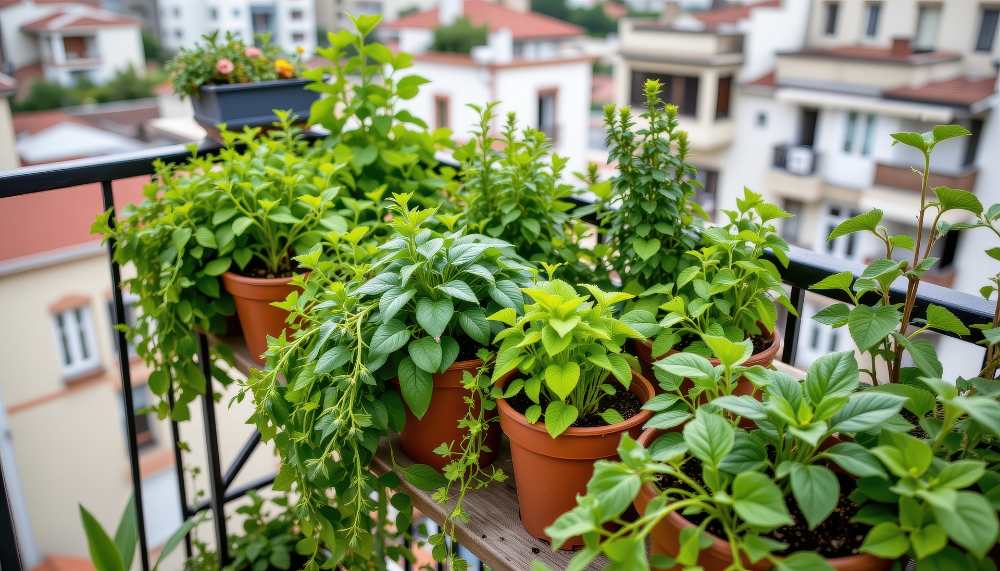
Your Balcony Can Become a Tiny Garden
A balcony receiving plenty of direct sunlight offers the most opportunities.
Containers can hold tomatoes, peppers, herbs, lettuce, and other compact plants without requiring an actual garden bed.
You don’t need ten plants.
One tomato plant and a few pots of herbs can be enough to make the balcony feel productive without turning gardening into another full-time job.
Before adding containers, however, apartment and condo residents should check building rules regarding balcony plants, hanging containers, drainage, and weight.
Lorem ipsum dolor sit amet, consectetur adipiscing elit. Ut elit tellus, luctus nec ullamcorper mattis, pulvinar dapibus leo.
What If You Only Have a Window?
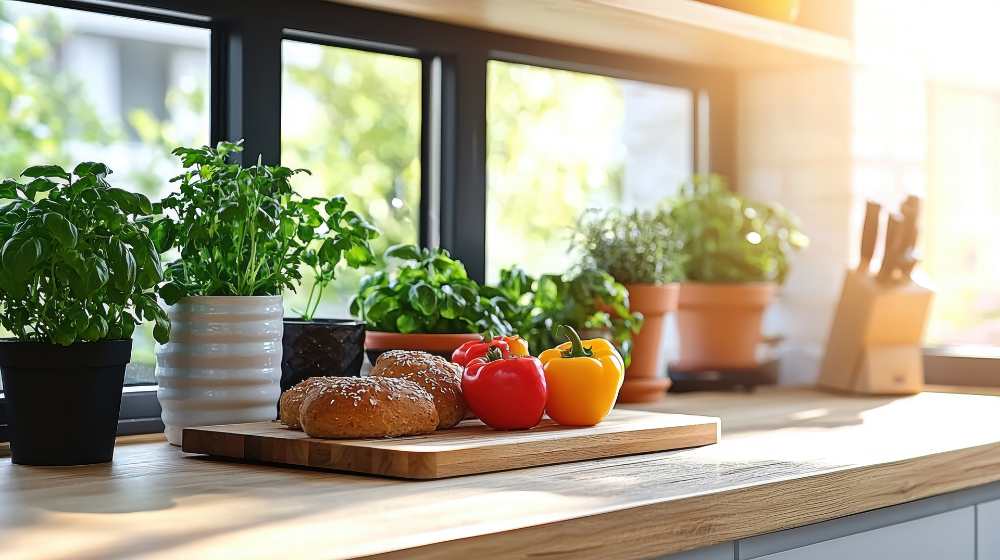
A bright window can still be useful.
Herbs are generally the first thing worth considering because they take relatively little room and can be used frequently in cooking.
A few small pots near the kitchen can also make fresh herbs incredibly convenient.
Making pasta?
Cut some basil.
Preparing soup?
Add parsley.
Making a salad?
A few fresh herbs can completely change the flavor.
Your garden may only occupy a few inches of windowsill, but it can still become part of your kitchen.
What If Your Apartment Doesn’t Get Much Sun?
This is where it’s important to be realistic.
Vegetable plants need light, and some fruiting plants require a significant amount of direct sunlight to produce well.
If your apartment receives very little natural light, trying to grow tomatoes indoors may create more frustration than vegetables.
You could consider supplemental grow lights, but now you are adding equipment, electricity, and expense.
At some point, buying tomatoes at the supermarket becomes much easier.
And that’s perfectly fine.
Apartment gardening should make life more enjoyable not more complicated.
Will Growing Vegetables Save Money?
Maybe.
But probably not enough to dramatically change your grocery budget.
You may need:
- containers
- potting mix
- seeds or starter plants
- fertilizer
- watering equipment
If you spend $50 creating a garden to grow $12 worth of vegetables, you’re not exactly beating the supermarket.
That’s why herbs can make so much sense.
A healthy herb plant can provide repeated harvests, and fresh herbs can be relatively expensive when purchased in small supermarket packages.
The real value is often a combination of savings, freshness, convenience, and enjoyment.
There Is Something Special About Eating What You Grow
This may be the biggest reason to try it.
Imagine making a tomato salad using a tomato you watched grow outside your window.
Or cutting basil from your balcony and putting it directly onto tonight’s pasta.
You know exactly where it came from.
You watched it grow.
You cared for it.
And now you’re eating it.
That creates a different relationship with food.
Even one small plant can remind us that vegetables don’t begin in supermarket produce departments. Someone has to grow them.
Apartment Gardening Can Be Good for Children Too
A small vegetable or herb plant can also be a wonderful way to introduce children to food.
Watching a seed become a plant and eventually become something they can eat makes vegetables more interesting.
A child who watches a cherry tomato grow may become much more curious about tasting it.
It turns food into an experience rather than something that simply appears on a plate.
Don’t Try to Grow Everything
This may be the most important advice.
Start small.
Choose one or two herbs you frequently cook with.
If that goes well, add another plant.
Maybe eventually try cherry tomatoes, peppers, lettuce, or green onions.
You don’t need to transform your apartment into a greenhouse.
The purpose is to add something fresh and enjoyable to your kitchen.
The Let’s Veg Way
At Let’s Veg, we believe simple cooking begins with appreciating ingredients.
Growing even a small amount of your own food can deepen that appreciation.
You may still buy almost all of your vegetables at the supermarket and there’s absolutely nothing wrong with that.
But having basil growing near your kitchen window or a tomato plant on your balcony creates a small connection between growing food and cooking it.
Sometimes that’s worth more than the money you save.
So, is growing vegetables in an apartment really worth it?
If your goal is to stop buying vegetables at the supermarket, probably not.
But if your goal is fresh herbs, a few homegrown vegetables, less waste, a little enjoyment, and the satisfaction of cooking with something you grew yourself, the answer can absolutely be yes.
You don’t need a backyard.
You don’t need ten acres.
Sometimes all you need is one sunny window, one pot, and one plant.
Then one evening, that little plant becomes part of dinner.
Cook Simple • Eat Together
Start with the Vegetable Cooking Guide:
https://www.letsveg.com/vegetable-cooking-guide