

Rice pudding transforms a simple pantry ingredient into a rich and comforting dessert. As rice slowly cooks, it releases starch into the surrounding liquid, creating a naturally thick and creamy consistency.
Replacing traditional dairy milk with coconut milk introduces a delicate tropical flavor while maintaining the smooth texture associated with classic rice pudding.
Full-fat coconut milk is particularly suitable for this preparation because its natural fat content provides richness without requiring heavy cream, butter, or eggs.
Short-grain rice works especially well because it releases more starch during cooking than many long-grain varieties. Arborio rice, commonly associated with Italian risotto, is another excellent choice for achieving a creamy pudding.
The rice is gently simmered with coconut milk, water, and a cinnamon stick. Slow cooking allows the grains to soften while absorbing the coconut flavor.
Sugar provides sweetness, while vanilla extract adds a warm, fragrant aroma. A small pinch of salt helps balance the flavors and prevents the dessert from tasting excessively sweet.
Toasted coconut flakes provide a slightly crisp texture that contrasts with the softness of the rice pudding.
This dessert can be enjoyed warm, at room temperature, or chilled. When refrigerated, the pudding becomes thicker as the rice continues to absorb moisture.
Fresh mango, banana, pineapple, or berries can be added before serving for a refreshing variation.
Naturally dairy-free and vegan, coconut rice pudding is a simple dessert that can be prepared using everyday ingredients.
Start with the Vegetable Cooking Guide:
https://www.letsveg.com/vegetable-cooking-guide
Video
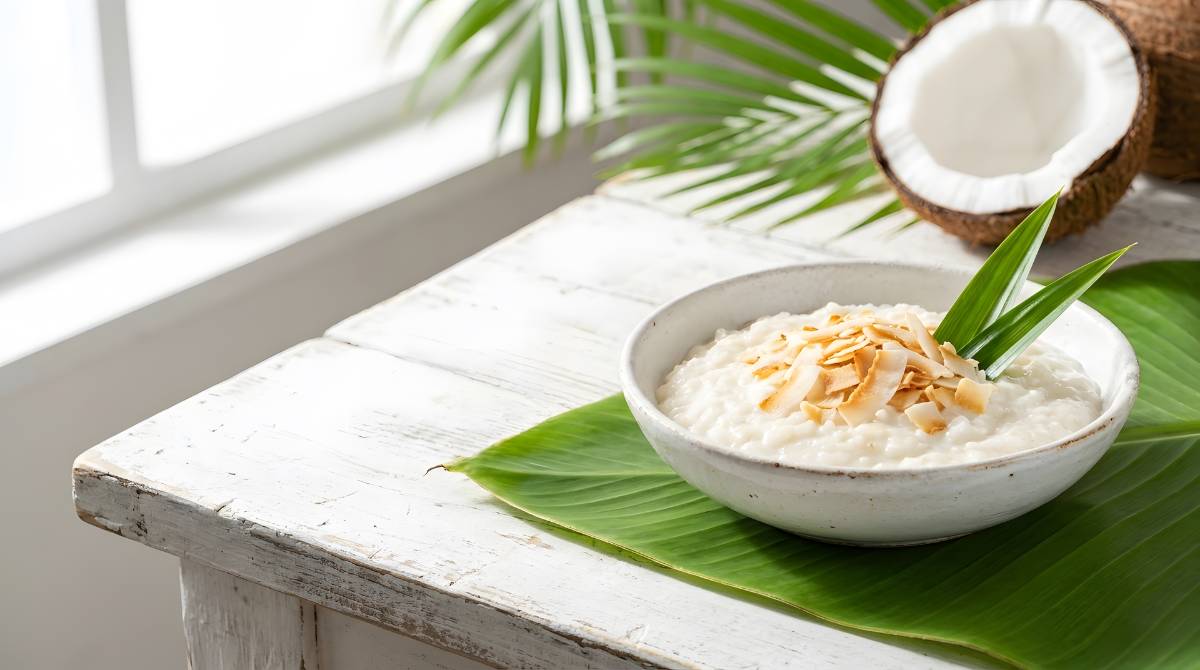
Creamy Coconut Rice Pudding with Vanilla and Cinnamon
Ingredients

Equipment

Cooking Instructions
- Place the rice in a fine-mesh strainer and rinse briefly under cold running water to remove loose surface starch. Avoid rinsing excessively, as some of the starch contributes to the pudding's creamy texture.
- Shake the cans of coconut milk before opening to help combine the coconut cream and liquid.
- Pour the coconut milk and water into a medium heavy-bottomed saucepan.
- Add the rice, cinnamon stick, and salt.
- Stir gently to combine the ingredients and place the saucepan over medium heat.
- Bring the mixture to a gentle simmer, stirring occasionally to prevent the rice from sticking to the bottom.
- Once the liquid begins to simmer, reduce the heat to low.
- Cook uncovered for approximately 25-30 minutes, stirring every few minutes.
- As the rice softens and the mixture thickens, stir more frequently to prevent sticking or scorching.
- Avoid allowing the coconut milk to boil vigorously, as excessive heat can cause the mixture to separate or reduce too quickly.
- When the rice is nearly tender, add the granulated sugar and optional ground cardamom.
- Stir until the sugar has completely dissolved.
- Continue cooking over low heat for another 5-7 minutes, or until the rice is fully tender and the pudding reaches a thick, creamy consistency.
- If the pudding becomes too thick before the rice is completely cooked, add a few tablespoons of warm water or coconut milk and continue simmering.
- Remove the saucepan from the heat.
- Carefully remove and discard the cinnamon stick.
- Stir in the vanilla extract until evenly distributed throughout the pudding.
- Allow the rice pudding to rest for approximately 10 minutes. The mixture will continue to thicken as it cools.
- While the pudding rests, place a small dry skillet over medium-low heat.
- Add the unsweetened coconut flakes and toast for approximately 2-3 minutes, stirring frequently until lightly golden and fragrant.
- Immediately transfer the toasted coconut flakes to a small plate to prevent further browning.
- Divide the coconut rice pudding evenly among six serving bowls.
- Sprinkle each serving with a little ground cinnamon and toasted coconut.
- Add chopped pistachios if desired for additional texture and flavor.
- For a tropical presentation, garnish with diced mango, fresh banana slices, or mint leaves.
- Serve warm, or transfer the pudding to the refrigerator and chill for at least 2 hours before serving cold.
- If the chilled pudding becomes too thick, stir in a small amount of coconut milk before serving.