Ingredients

Equipment

small soup pot
Cooking Instructions
- Place the rice in a fine-mesh strainer and rinse briefly under cold running water to remove loose surface starch. Avoid rinsing excessively, as some of the starch contributes to the pudding's creamy texture.
- Shake the cans of coconut milk before opening to help combine the coconut cream and liquid.
- Pour the coconut milk and water into a medium heavy-bottomed saucepan.
- Add the rice, cinnamon stick, and salt.
- Stir gently to combine the ingredients and place the saucepan over medium heat.
- Bring the mixture to a gentle simmer, stirring occasionally to prevent the rice from sticking to the bottom.
- Once the liquid begins to simmer, reduce the heat to low.
- Cook uncovered for approximately 25-30 minutes, stirring every few minutes.
- As the rice softens and the mixture thickens, stir more frequently to prevent sticking or scorching.
- Avoid allowing the coconut milk to boil vigorously, as excessive heat can cause the mixture to separate or reduce too quickly.
- When the rice is nearly tender, add the granulated sugar and optional ground cardamom.
- Stir until the sugar has completely dissolved.
- Continue cooking over low heat for another 5-7 minutes, or until the rice is fully tender and the pudding reaches a thick, creamy consistency.
- If the pudding becomes too thick before the rice is completely cooked, add a few tablespoons of warm water or coconut milk and continue simmering.
- Remove the saucepan from the heat.
- Carefully remove and discard the cinnamon stick.
- Stir in the vanilla extract until evenly distributed throughout the pudding.
- Allow the rice pudding to rest for approximately 10 minutes. The mixture will continue to thicken as it cools.
- While the pudding rests, place a small dry skillet over medium-low heat.
- Add the unsweetened coconut flakes and toast for approximately 2-3 minutes, stirring frequently until lightly golden and fragrant.
- Immediately transfer the toasted coconut flakes to a small plate to prevent further browning.
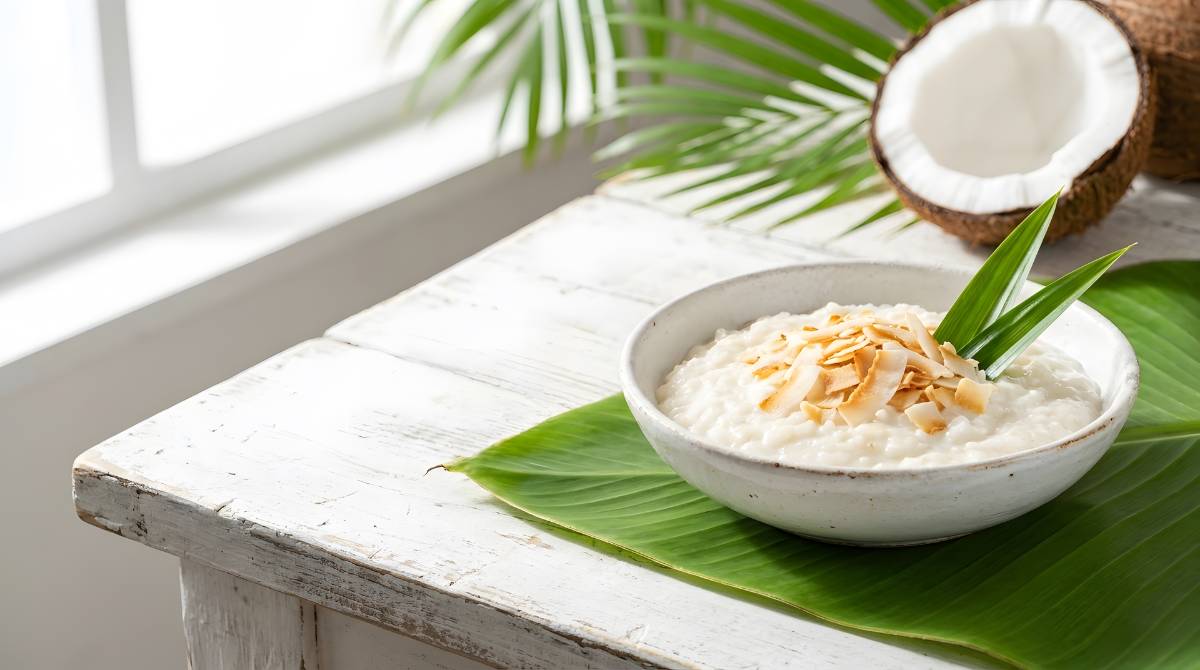
- Divide the coconut rice pudding evenly among six serving bowls.
- Sprinkle each serving with a little ground cinnamon and toasted coconut.
- Add chopped pistachios if desired for additional texture and flavor.
- For a tropical presentation, garnish with diced mango, fresh banana slices, or mint leaves.
- Serve warm, or transfer the pudding to the refrigerator and chill for at least 2 hours before serving cold.
- If the chilled pudding becomes too thick, stir in a small amount of coconut milk before serving.
Nutrition
Notes
Choose the right rice: Short-grain white rice or Arborio rice produces a naturally creamy pudding because of its starch content. Jasmine rice can also be used for a more fragrant result, although the finished texture may be slightly less creamy.
Use canned coconut milk: Unsweetened full-fat canned coconut milk provides the richness needed for this dessert. Refrigerated coconut milk beverages are considerably thinner and will not produce the same creamy consistency.
Add sugar toward the end: Allow the rice to soften before adding sugar. Adding sugar too early can slow the absorption of liquid and increase the likelihood of the pudding sticking to the saucepan.
Avoid over-thickening: Remove the pudding from the heat while it is still slightly loose and spoonable. Rice continues absorbing moisture during cooling, particularly when refrigerated. Stir in additional coconut milk if necessary before serving.
Experiment with tropical flavors: Fresh mango, pineapple, banana, or passion fruit complements the coconut flavor. For a more aromatic variation, replace the cinnamon stick with lightly crushed cardamom pods or add a small amount of freshly grated lime zest after cooking.
Storage and reheating: Transfer leftover rice pudding to shallow, covered containers and refrigerate promptly, ideally within one hour of cooking. Consume within 24 hours. If reheating, add a splash of coconut milk and heat until steaming throughout. Reheat only once.