

A good breakfast panini combines three important textures: soft eggs, juicy tomatoes, and crisp toasted bread.
The omelet is the foundation of this sandwich. Cooking the eggs gently keeps them tender and prevents the filling from becoming dry after the sandwich is pressed.
Fresh tomatoes bring a slightly acidic flavor that balances the richness of the eggs and cheese. Their natural sweetness becomes more noticeable when warmed inside the sandwich.
Mozzarella is particularly suitable because it melts smoothly without overpowering the delicate flavor of the omelet. A small amount of fresh basil adds an Italian-inspired aroma that complements the tomatoes.
The bread also plays an important role. Ciabatta or sturdy sourdough can withstand the pressure of a panini press while developing a crisp exterior.
One challenge when preparing tomato panini is excess moisture. Tomatoes release juice as they warm, which can soften the bread. Patting the slices dry and placing them between the omelet and cheese helps reduce this problem.
The omelet should be cooked before assembling the sandwich. This ensures that the eggs are fully set while allowing the panini to spend only enough time on the grill to toast the bread and melt the cheese.
The finished sandwich is golden and crisp on the outside, with a soft omelet, warm tomato slices, and melted mozzarella inside.
It makes a convenient vegetarian breakfast, brunch, or light lunch and can be served with fresh fruit, a simple green salad, or roasted potatoes.
Start with the Vegetable Cooking Guide:
https://www.letsveg.com/vegetable-cooking-guide
Video
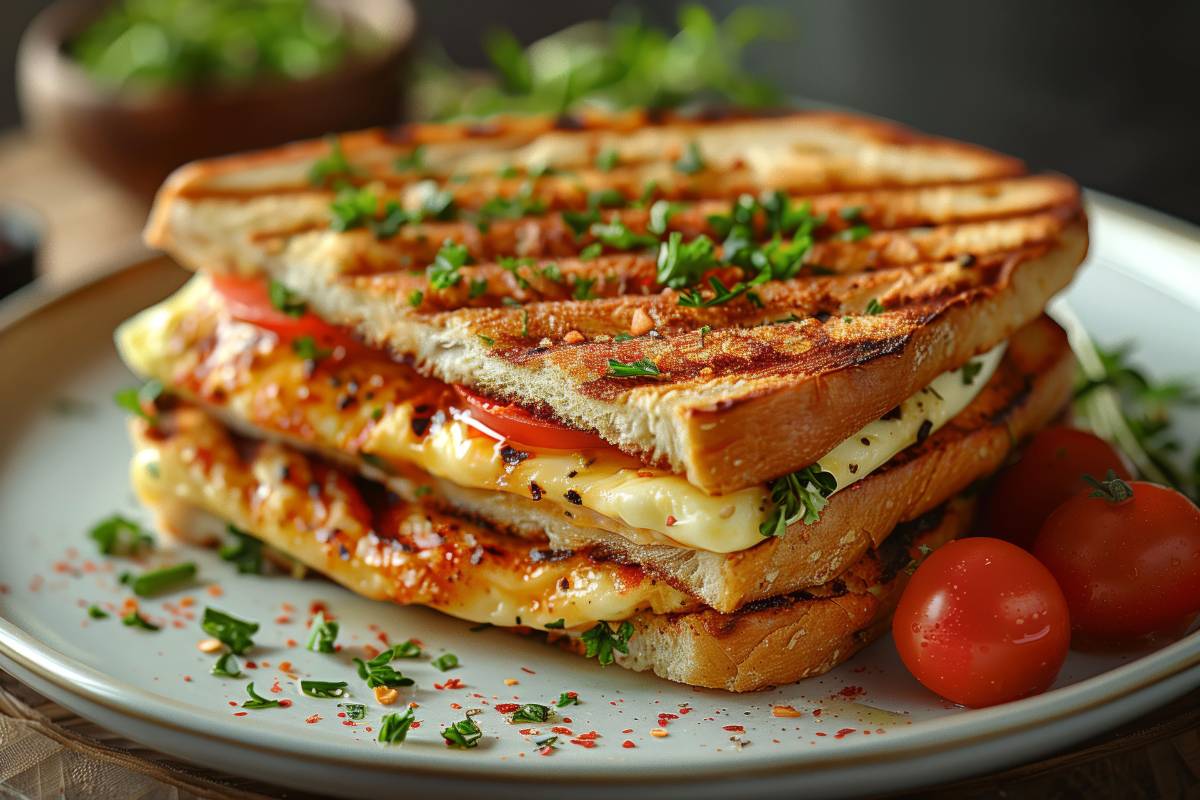
Egg Omelet and Tomato Panini with Melted Cheese
Ingredients

Equipment


Cooking Instructions
- Wash the tomato and cut it into thin, even slices, approximately ¼ inch thick.
- Arrange the tomato slices on a plate lined with paper towels. Gently pat the tops dry to remove excess surface moisture. Set aside while preparing the omelet.
- Crack the eggs into a medium mixing bowl. Add the milk, salt, and black pepper.
- Whisk gently with a fork until the yolks and whites are combined. Avoid excessive whisking, which can introduce unnecessary air into the mixture.
- Stir in the optional chopped chives.
- Heat a medium nonstick skillet over medium-low heat and add half of the butter.
- Once the butter has melted and begins to foam gently, pour half of the egg mixture into the skillet.
- Tilt the pan slightly to distribute the eggs into an even layer.
- Allow the eggs to cook for approximately 1 minute, then gently lift the edges with a spatula and tilt the skillet so any uncooked egg flows underneath.
- Continue cooking for approximately 2-3 minutes, until the omelet is set and no liquid egg remains on the surface.
- Fold the omelet in half, then fold it again if necessary to create a shape that fits comfortably inside the ciabatta roll.
- Transfer the omelet to a plate.
- Add the remaining butter to the skillet and repeat the process with the remaining egg mixture.
- Preheat a panini press according to the manufacturer's instructions. If using a grill pan, heat it over medium heat.
- Slice the ciabatta rolls horizontally if they are not already cut.
- Brush the outer surfaces of the bread lightly with olive oil. This helps create a crisp, golden crust during grilling.
- If using Dijon mustard, spread a thin layer over the inside of the bottom half of each roll.
- Place one folded omelet on the bottom half of each ciabatta roll.
- Arrange the tomato slices over the omelets, dividing them evenly between the two sandwiches.
- Sprinkle the tomatoes lightly with dried oregano and freshly ground black pepper.
- Place the mozzarella slices over the tomatoes.
- Add 2-3 fresh basil leaves to each sandwich, then cover with the top halves of the ciabatta rolls.
- Place the assembled sandwiches in the preheated panini press.
- Close the press gently and grill for approximately 3–5 minutes, until the bread is golden and crisp and the mozzarella has melted.
- If using a grill pan, place the sandwiches in the pan and press gently with a heavy skillet or spatula. Cook for approximately 3 minutes per side, turning carefully, until both sides are toasted and the cheese is melted.
- Remove the panini from the heat and allow them to rest for approximately 1 minute.
- Slice each sandwich diagonally using a sharp serrated knife.
- Serve immediately while the bread is crisp and the cheese is warm.
Nutrition
Notes
- Choose sturdy bread: Ciabatta is ideal because its firm crust and airy interior hold the omelet and tomato filling without becoming excessively compressed. Sourdough or a sturdy Italian sandwich roll also works well. Very soft sandwich bread may flatten too much under a panini press.
- Reduce tomato moisture: Use firm, ripe tomatoes rather than overly soft ones. Pat the slices dry before assembling the sandwich to prevent excess juice from soaking into the bread. Avoid adding tomato slices that are unusually thick.
- Use low-moisture mozzarella: Low-moisture mozzarella melts smoothly and releases less liquid than fresh mozzarella packed in water. If using fresh mozzarella, drain it thoroughly and pat the slices dry before adding them to the sandwich.
- Avoid overfilling the panini: A thick omelet or too many tomato slices can make the sandwich difficult to press and cause the filling to slide out. Fold the omelet to fit the bread and arrange the cheese in a single, even layer.
- Serve freshly grilled: Egg and tomato panini taste best immediately after preparation. For advance preparation, refrigerate the cooked omelets separately for up to 2 days and assemble the sandwiches just before grilling. Refrigerate any leftover assembled panini promptly and reheat until thoroughly heated.