

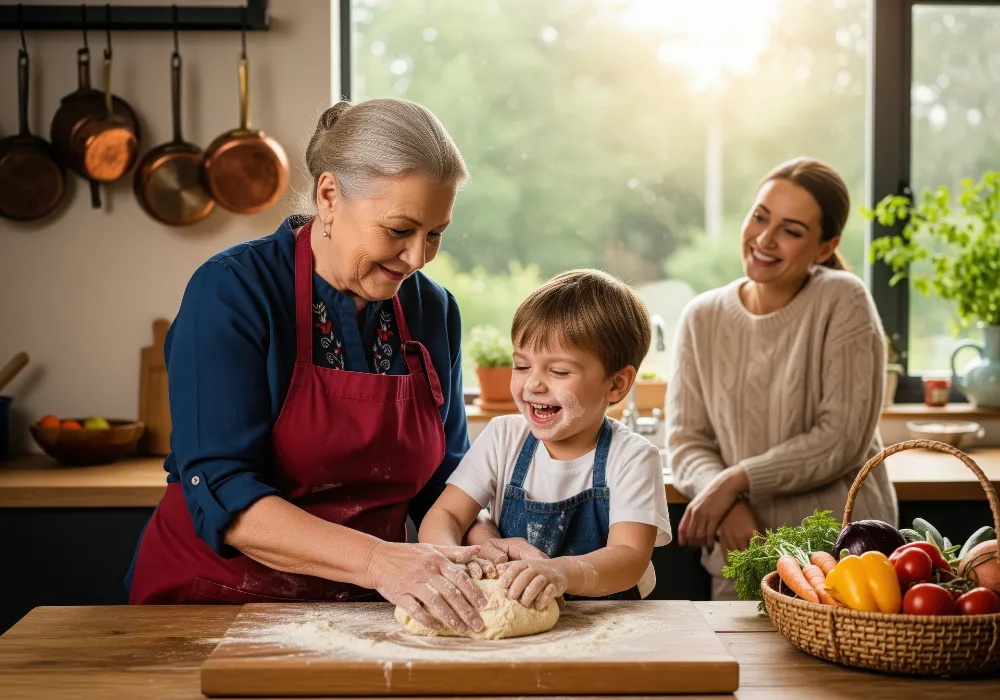

How People Learned to Cook
Today, learning to cook is easier than ever.
Thousands of recipes are available online. Cooking videos can be watched in seconds. Entire libraries of cookbooks are available with a single search.
But for most of human history, none of that existed.
There were no recipe websites, no cooking shows, and often no written recipes at all. Yet people still prepared meals every day, passed down traditions, and created many of the foods we still enjoy today.
So how did people learn to cook before cookbooks existed?
The answer is surprisingly simple: they learned by watching, helping, and repeating.
Cooking Was Learned at Home
For generations, the kitchen was the classroom.
Children learned by:
- watching parents cook
- helping prepare vegetables
- stirring pots
- kneading dough
- setting the table
Cooking knowledge was passed naturally from one generation to the next.
No one needed a written recipe because the process became part of everyday life.
Most Recipes Were Never Written Down
Many traditional dishes existed long before they were ever recorded in books.
People cooked from memory.
Measurements were often based on experience:
- a handful of grain
- a pinch of salt
- enough water to cover the ingredients
The goal was not perfection. It was creating a meal that worked.
This is why family recipes often differ slightly from one household to another.
Repetition Was the Teacher
Families cooked the same meals repeatedly.
Soups, breads, rice dishes, vegetable stews, and seasonal meals appeared week after week.
Through repetition, people learned:
- timing
- texture
- seasoning
- technique
The more often a meal was prepared, the more natural the process became.
Cooking Knowledge Was Shared Through Community
Learning did not happen only inside the home.
Neighbors, relatives, and communities shared cooking knowledge as well.
People learned:
- how to preserve food
- how to bake bread
- how to prepare seasonal ingredients
- how to cook for celebrations
Food traditions spread through conversation and observation long before they appeared in books.
Ingredients Shaped the Lessons
People cooked with what was available locally.
That meant learning how to work with:
- seasonal vegetables
- grains
- beans
- herbs
- local foods
Instead of searching for ingredients, people built meals around what they already had.
This helped create many of the regional food traditions we know today.
Cookbooks Came Much Later
Written cookbooks eventually became popular, but they were not originally created for everyday home cooks.
For centuries, many cookbooks were intended for:
- professional cooks
- wealthy households
- royal kitchens
Ordinary families continued learning the way they always had by watching and doing.
Even today, many people still learn their most treasured recipes from family members rather than books.
Some Things Have Not Changed
Technology has changed how recipes are shared, but some parts of cooking remain exactly the same.
People still learn by:
- observing others
- practicing
- making mistakes
- repeating meals
Cooking is still a skill that improves through experience more than reading.
The Let’s Veg Way
At Let’s Veg, cooking is about making food feel approachable and practical.
You do not need a complicated recipe to cook well. Some of the best meals come from understanding simple ingredients, learning basic techniques, and building confidence over time.
That is how people learned to cook for thousands of years, and it still works today.
Before cookbooks, people learned to cook through observation, repetition, and shared experience. Meals were passed from generation to generation through everyday life rather than written instructions.
While modern technology has made recipes easier to access, the heart of cooking remains the same: learning by doing.
At Let’s Veg, the belief is simple cooking is not about memorizing recipes. It is about building confidence, sharing knowledge, and creating meals that bring people together.
Start with our