

Why Roasted Vegetables Turn Soggy and How to Get Better Browning
Roasting vegetables should be simple. Cut them, add a little olive oil and seasoning, spread them on a baking sheet, and place them in the oven. Yet sometimes the results are disappointing. Instead of golden edges and a pleasantly roasted flavor, the vegetables come out soft, watery, or pale.
The problem usually isn’t the vegetables themselves. It is how moisture, heat, and space interact during cooking.
If your roasted vegetables turn soggy, the most common causes are overcrowding the baking sheet, excess surface moisture, unevenly sized pieces, or an oven that hasn’t reached the proper temperature.
Understanding these small details can make a noticeable difference, whether you’re roasting potatoes, carrots, cauliflower, Brussels sprouts, or a mixture of seasonal vegetables.
Why Roasted Vegetables Turn Soggy Instead of Brown
Vegetables naturally contain water. When they enter a hot oven, some of that moisture begins to evaporate.
For vegetables to develop browned surfaces, enough moisture must evaporate for their surfaces to become hot enough for browning reactions to occur.
Two important processes contribute to the flavor and color of roasted vegetables.
The Maillard reaction occurs when certain sugars and amino compounds react under heat, producing complex flavors and browned surfaces.
Caramelization involves the browning of sugars when heated sufficiently. Depending on the vegetable and cooking conditions, both processes can contribute to roasted flavor.
However, when too much moisture remains around the vegetables, their surfaces stay relatively cool. Instead of browning efficiently, they continue to soften in the steam.
This explains why vegetables can be completely cooked but still lack the color and texture you expected.
1. Too Much Moisture Prevents Good Browning
One of the easiest mistakes happens before the vegetables even enter the oven.
After washing vegetables, many people cut them immediately and place them on a baking sheet while water is still clinging to their surfaces.
That extra water must evaporate before effective browning can begin.
The problem becomes more noticeable with vegetables that naturally release substantial moisture during cooking.
Zucchini, mushrooms, eggplant, and tomatoes behave differently from denser vegetables such as potatoes, carrots, and parsnips.
How to Reduce Excess Moisture
After washing vegetables, allow them to drain thoroughly.
Use a clean kitchen towel or paper towel to remove visible surface moisture before adding oil and seasoning.
For broccoli and cauliflower, pay particular attention to water trapped between the florets.
If vegetables have been boiled or blanched before roasting, drain them thoroughly and allow excess steam to escape.
You do not need to remove all the natural moisture inside a vegetable. The goal is simply to avoid adding unnecessary water to the roasting process.
2. An Overcrowded Baking Sheet Creates Steam
Imagine placing a large pile of chopped vegetables on a single baking sheet.
Even if the oven is hot, the vegetables release moisture as they cook. When pieces are packed tightly together, that moisture has fewer opportunities to escape.
The vegetables begin steaming against one another instead of developing browned surfaces.
This is one of the most common reasons roasted vegetables turn soft and pale.
Give Vegetables Room to Roast
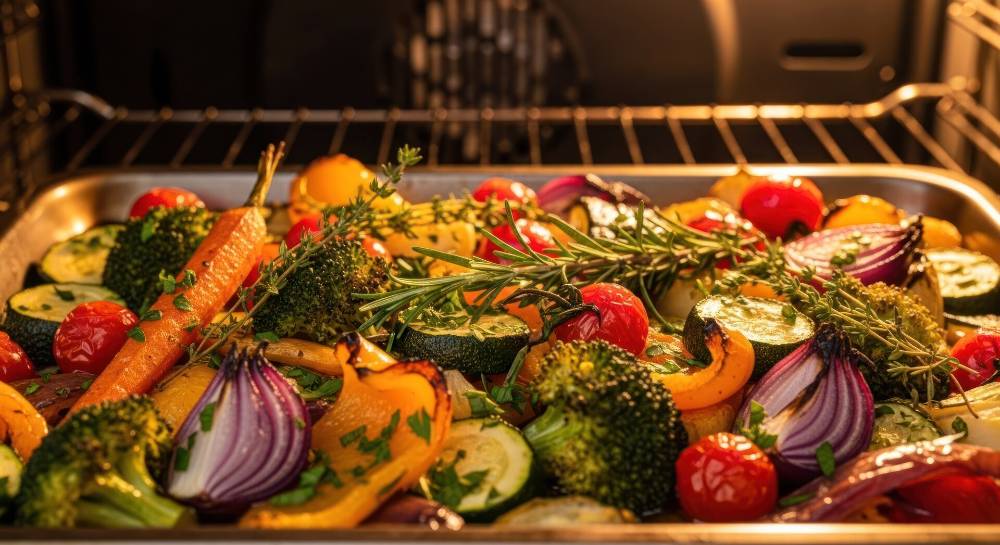
Arrange vegetables in a single layer.
Leave a little space between pieces whenever possible.
Avoid piling vegetables on top of one another, particularly when roasting potatoes, Brussels sprouts, or cauliflower.
If you have more vegetables than one baking sheet can comfortably hold, use two sheets or roast in batches.
Two properly spaced trays can produce better results than one overloaded tray.
If using two trays, rotate their positions during cooking when necessary, since oven temperatures and airflow can vary between racks.
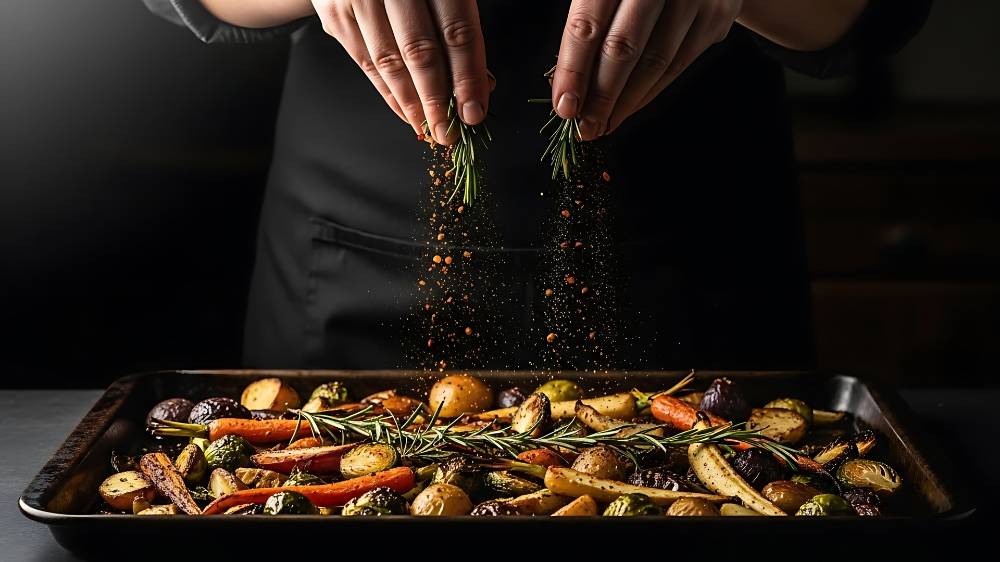
A useful example is our Golden Roasted Carrots and Potatoes recipe. It combines potatoes, carrots, garlic, olive oil, and herbs on a baking sheet, with instructions to spread the vegetables in a single layer before roasting.
3. Vegetable Size Changes Cooking Time and Texture
Cutting vegetables into random sizes can create another problem.
Small pieces may become overly dark or dry before larger pieces are fully cooked.
Large pieces may soften inside without developing much surface browning.
The solution is not necessarily to cut everything into tiny cubes. Instead, consider how quickly each vegetable cooks.
How to Cut Vegetables for Better Roasting
For potatoes, try evenly sized chunks or wedges.
For carrots, use thick slices or similarly sized pieces rather than mixing very thin rounds with large chunks.
For cauliflower, divide the head into florets of reasonably consistent size.
For Brussels sprouts, halve medium or large sprouts so their flat surfaces can make contact with the baking sheet.
Uniform cutting helps pieces of the same vegetable cook at approximately the same rate.
However, when roasting different vegetables together, identical sizes are not always ideal.
A carrot and a zucchini do not cook at the same speed simply because they are cut into matching cubes.
Denser vegetables generally require more cooking time, while vegetables with higher water content may soften sooner.
When combining vegetables with very different cooking times, consider adding the quicker-cooking vegetables later.
4. The Oven Must Be Properly Preheated
Putting vegetables into an oven that is still warming up can interfere with browning.
During the early stages of cooking, the vegetables release moisture while the oven temperature continues rising.
This can delay the development of browned surfaces.
For many roasted vegetable recipes, temperatures around 400–425°F (200–220°C) provide a useful starting range.
Some vegetables and recipes benefit from higher temperatures, while delicate ingredients may require gentler heat.
Always follow the temperature recommended for the specific recipe and adjust according to the vegetables and your oven.
Should You Preheat the Baking Sheet?
Preheating a sturdy metal baking sheet can help certain vegetables begin browning as soon as they touch the hot surface.
This can be particularly useful for potatoes, carrots, and Brussels sprouts.
However, it is optional rather than essential.
If using this method, handle the hot baking sheet carefully and add the prepared vegetables without crowding.
Do not place parchment paper on a preheated sheet unless the paper is rated for the temperature and the method is appropriate for the manufacturer’s instructions.
A properly preheated oven, good spacing, and dry vegetables are more important than any single roasting trick.
5. Using Too Much Oil Can Affect the Texture
Oil helps vegetables roast by coating their surfaces, improving heat transfer, and contributing to flavor.
But adding excessive oil is not the answer to poor browning.
Vegetables swimming in oil may develop a greasy texture, while unevenly coated vegetables can cook inconsistently.
The goal is a light, even coating.
Place the vegetables in a mixing bowl, add the oil and seasonings, and toss until the surfaces are coated.
Then transfer everything to the baking sheet.
This distributes oil more evenly than pouring it over vegetables after they have already been spread across the tray.
For vegetables such as eggplant, which can absorb oil readily, begin with a modest amount and distribute it carefully.
6. Your Baking Sheet Makes a Difference
Not every oven-safe dish produces the same roasting results.
A shallow metal baking sheet allows moisture to escape more readily than a deep baking dish.
Metal also transfers heat efficiently to the surfaces touching the pan.
A sturdy, rimmed metal baking sheet is a practical choice for most roasted vegetables.
Parchment Paper or Bare Metal?
Parchment paper makes cleanup easier and can help prevent sticking.
However, direct contact with a metal baking sheet often produces stronger browning, especially on the underside of potatoes and other firm vegetables.
Neither approach is automatically wrong.
Use parchment when convenience and easy cleanup matter most, provided the oven temperature stays within the paper manufacturer’s limits.
Try a lightly oiled metal baking sheet when deeper surface browning is the priority.
7. Different Vegetables Need Different Roasting Approaches
Vegetables vary in density, moisture content, and natural sugar composition.
Understanding those differences helps explain why one roasting method does not work equally well for everything.
Potatoes
Potatoes benefit from sufficient heat, good spacing, and contact with the baking sheet.
Placing cut surfaces against the pan encourages browning.
Avoid moving them constantly. Allow enough contact time for a golden surface to develop before turning.
Carrots
Carrots develop a sweeter flavor as they roast and lose moisture.
Thicker pieces are less likely to become overly soft before browning.
Cutting them into reasonably uniform pieces helps prevent thin sections from overcooking.
Brussels Sprouts
Halving Brussels sprouts exposes a flat surface that can brown against the baking sheet.
Place the cut sides down and avoid crowding.
The outer leaves may become dark and crisp before the centers are fully tender, so check both color and texture.
Cauliflower
Cauliflower florets can trap water after washing.
Dry them thoroughly before roasting.
Flat cut surfaces generally brown more readily than rounded surfaces with limited contact against the pan.
Zucchini and Mushrooms
These vegetables release considerable moisture during cooking.
Use a hot oven, avoid overcrowding, and give them enough space for moisture to evaporate.
Expect a softer interior than you would get from roasted potatoes.
The goal is browned surfaces and concentrated flavor, not necessarily a crunchy texture throughout.
8. Should You Stir Vegetables While Roasting?
Stirring can help vegetables cook evenly, but turning them too frequently may interrupt surface browning.
When vegetables remain in contact with a hot baking sheet, their undersides have an opportunity to develop color.
For many recipes, turning once around the middle of cooking is sufficient.
Some vegetables, particularly halved Brussels sprouts or potatoes placed cut-side down, may benefit from remaining undisturbed longer.
Watch the vegetables rather than relying entirely on the clock.
Look for browned edges, tender centers, and surfaces that appear roasted rather than wet.
What to Do When Your Vegetables Are Already Soggy
Sometimes you discover the problem halfway through cooking.
Perhaps the baking sheet is crowded, or the vegetables have released more liquid than expected.
You may still be able to improve the results.
First, check whether excess liquid has collected on the pan.
If the vegetables are crowded, carefully spread them farther apart or divide them between two baking sheets.
If there is a substantial amount of pooled liquid, carefully transfer the vegetables to a dry baking sheet, leaving the excess liquid behind.
Return them to the hot oven and continue roasting until some additional browning develops.
Avoid repeatedly stirring them.
If the vegetables are already extremely soft, further roasting may dry or overcook them before they become crisp.
In that case, use them in another dish rather than continuing to roast indefinitely.
Soft roasted vegetables can work well in pasta, grain bowls, blended soups, or vegetable spreads.
Try These Roasted Vegetable Recipes
Once you understand how moisture, spacing, and heat affect roasting, you can apply those principles to many different recipes.
Here are three Let’s Veg recipes worth exploring.
Golden Roasted Carrots and Potatoes
This recipe combines Yukon Gold or baby potatoes with carrots, garlic, rosemary, thyme, and olive oil.
The vegetables roast at 425°F, with a turn partway through cooking to help develop color.
Try Golden Roasted Carrots and Potatoes
Roasted Vegetables with Sweet Potatoes, Carrots, and Brussels Sprouts
This colorful combination brings together vegetables with different textures.
The recipe uses olive oil, thyme, oregano, and a 400°F oven.
It is a useful example of why consistent cutting and careful spacing matter when roasting several vegetables together.
Try Roasted Vegetables with Sweet Potatoes, Carrots, and Brussels Sprouts
Roasted Baby Potatoes with Parmesan and Basil
Baby potatoes are roasted with olive oil and oregano before being finished with Parmesan cheese and fresh basil.
The recipe recommends placing the cut sides down for improved browning.
Try Roasted Baby Potatoes with Parmesan and Basil
Better Roasting Begins Before the Oven
The next time you prepare roasted vegetables, pay attention to the baking sheet before placing it in the oven.
Are the vegetables dry? Are the pieces reasonably uniform? Is there enough space between them? Has the oven reached the correct temperature?
These details often matter more than adding extra oil or extending the cooking time.
Start with a simple combination such as potatoes and carrots. Once you become familiar with how they brown, experiment with cauliflower, Brussels sprouts, squash, or other seasonal vegetables.
A properly roasted vegetable should taste like the vegetable itself, with the added depth that comes from heat, moisture loss, and browned edges.
Start with the Vegetable Cooking Guide:
https://www.letsveg.com/vegetable-cooking-guide