

How Different Cultures Cook Eggplant
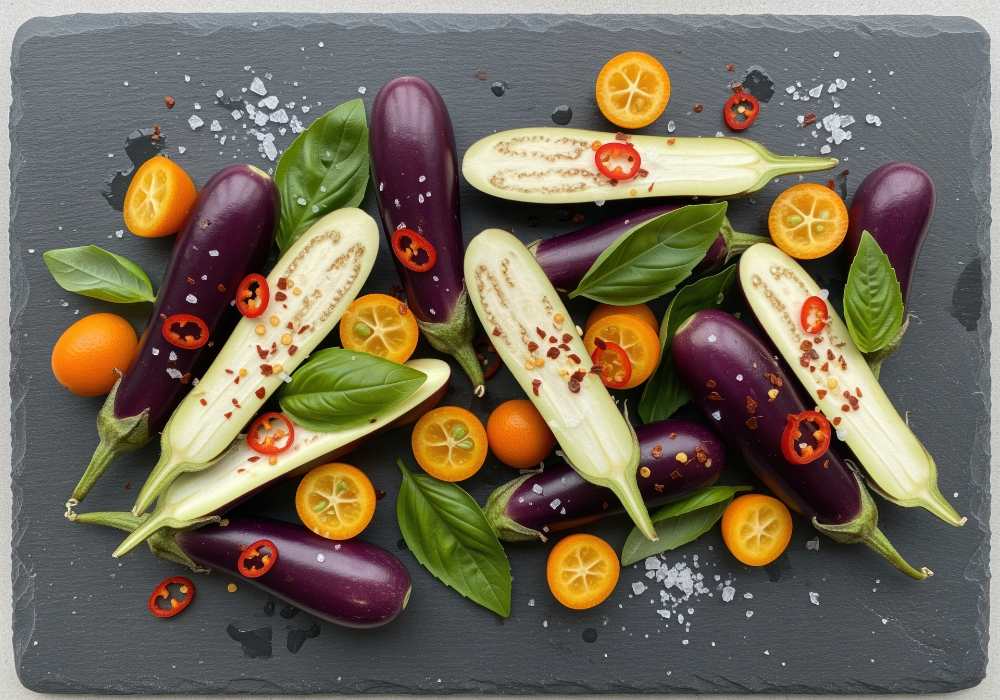
Few vegetables travel around the world as well as eggplant.
Put an eggplant in the hands of cooks from different countries and you may hardly recognize it as the same vegetable when dinner reaches the table.
One culture roasts it over fire until smoky and soft. Another steams it and dresses it with sesame and garlic. Around the Mediterranean, it may be roasted with olive oil and chickpeas. Somewhere else, it may go directly onto a hot grill.
The ingredient hasn’t changed.
The culture around it has.
That’s what makes eggplant such an interesting vegetable. It absorbs flavors beautifully, changes texture depending on how it is cooked, and has found a home in kitchens across Europe, Asia, the Middle East, the Mediterranean, and beyond.
Let’s take one vegetable around the world and see what happens.
Korea: Soft Eggplant Meets Bold Seasoning
Korean cooking shows how dramatically eggplant can change without requiring heavy preparation.
In the Let’s Veg Korean-Style Eggplant Salad with Carrots, Garlic & Herbs, the eggplant is lightly steamed until tender and then combined with carrots, garlic, soy sauce, rice vinegar, sesame oil, chili, sesame seeds, and green onions.
The result combines soft eggplant with fresh crunch and bold seasoning.
Instead of hiding the eggplant beneath a heavy sauce, this preparation takes advantage of something eggplant does particularly well: absorbing the flavors around it.
Try on Let’s Veg: Korean-Style Eggplant Salad with Carrots, Garlic & Herbs
Bulgaria: Fire, Peppers, and Kyopolou
Travel to Bulgaria and eggplant takes on another personality entirely.
Kyopolou is a traditional Bulgarian spread built around roasted eggplant and red peppers.
The vegetables are roasted until the skins char and the flesh becomes extremely soft. Garlic, tomato, olive oil, and parsley complete the dish.
What began as a firm purple vegetable becomes smoky, soft, and spreadable.
Serve it with bread or as part of a table of small dishes and eggplant suddenly feels less like a vegetable side and more like the center of the conversation.
Try on Let’s Veg: Kyopolou
The Mediterranean: Eggplant Loves Olive Oil
Eggplant and Mediterranean cooking seem made for each other.
Roasting transforms eggplant’s spongy raw texture into something tender and rich, while olive oil, lemon, garlic, and herbs bring brightness.
The Let’s Veg Roasted Eggplant & Chickpea Salad combines roasted eggplant with chickpeas before finishing everything with a lemon and garlic dressing and fresh herbs.
It also demonstrates something important about traditional vegetable cooking.
Vegetables don’t always need to sit beside the meal.
Combined with beans or grains, they can help become the meal.
Try on Let’s Veg: Roasted Eggplant & Chickpea Salad
From the Grill: A Completely Different Eggplant
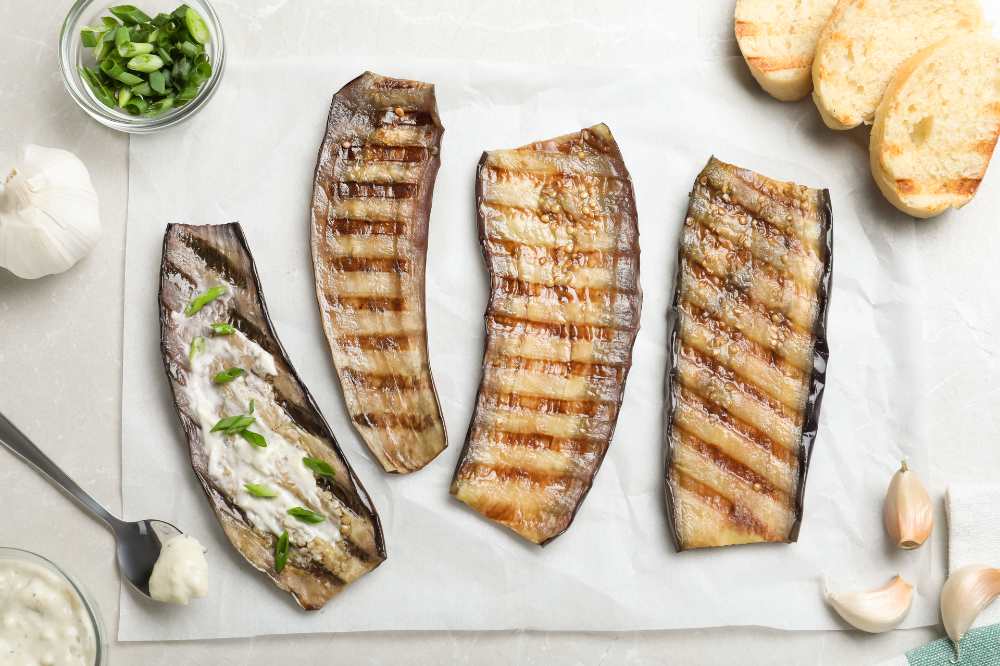
Now take that same eggplant and put it directly over heat.
Grilling changes everything.
The outside develops deeper flavor while the inside becomes tender. In the Let’s Veg Grilled Eggplant with Peanut Sauce, grilled eggplant is paired with a sauce made from peanut butter, soy sauce, lemon, and cilantro.
It is a very different experience from the Korean salad, Bulgarian spread, or Mediterranean roasted version.
And yet they all began with the same vegetable.
Try on Let’s Veg: Grilled Eggplant with Peanut Sauce
Why Does Eggplant Work in So Many Cuisines?
Eggplant has an unusual advantage.
It doesn’t insist on tasting only one way.
Its relatively mild flavor allows it to work with:
- garlic
- olive oil
- sesame
- soy sauce
- tomatoes
- peppers
- fresh herbs
- chili
- lemon
- nuts and seeds
Change the seasoning and cooking technique and you can change the personality of the entire dish.
Roast it and it becomes rich and tender.
Grill it and you add smoky character.
Steam it and it remains soft enough to absorb a flavorful dressing.
Mash roasted eggplant and it becomes a spread.
One vegetable can become dozens of completely different meals.
The Cooking Method Tells Part of the Cultural Story
This is what makes exploring food around the world so interesting.
Cultures don’t simply use different ingredients.
They develop different ways of treating the same ingredients.
Climate, agriculture, available spices, cooking equipment, family traditions, and neighboring cultures all influence what eventually appears on the plate.
That’s why studying one vegetable across several cuisines can teach us something about food itself.
Eggplant isn’t just eggplant.
It becomes part of the culture cooking it.
One Vegetable, Many Tables
Imagine placing these four Let’s Veg recipes beside one another.
A Korean eggplant salad.
Bulgarian Kyopolou.
Mediterranean roasted eggplant with chickpeas.
Grilled eggplant with peanut sauce.
Someone unfamiliar with the dishes might not immediately realize that eggplant connects all four.
That’s exactly the point.
Vegetables may be universal, but cultures give them identity.
The Let’s Veg Way
At Let’s Veg, exploring vegetables isn’t only about learning another recipe.
It’s also an opportunity to discover how people in other parts of the world cook, season, share, and enjoy food.
You don’t need to travel thousands of miles to experience some of those differences.
Sometimes you only need one familiar vegetable and a recipe from somewhere you’ve never cooked before.
Start with an eggplant.
Choose another part of the world.
And see where dinner takes you.
Eggplant is proof that simple ingredients don’t have to produce predictable meals.
Roasted, steamed, grilled, mashed, dressed with sesame, mixed with chickpeas, or combined with smoky peppers, the same vegetable has inspired dramatically different dishes.
That’s one of the great things about cooking.
Ingredients cross borders.
Cultures make them their own.
And generations later, we get to bring those traditions together around our own tables.
Cook Simple • Eat Together
Start with the Vegetable Cooking Guide:
https://www.letsveg.com/vegetable-cooking-guide