

Where Chili Peppers Came From and How They Changed Cooking
Imagine preparing an Indian curry without chili peppers, a Korean kimchi without red pepper flakes, or a spicy Thai sauce without fresh chilies.
These foods are so closely associated with their distinctive heat that it’s difficult to imagine them any other way. Yet there was a time when none of these cuisines contained the chili peppers we recognize today.
That’s because chili peppers originally came from the Americas.
For thousands of years, Indigenous communities in Central and South America cultivated and cooked with different varieties of chilies. Only after European voyages to the Americas began in the late fifteenth century did these peppers spread across the oceans.
Within a relatively short period, they became important ingredients in cuisines thousands of miles from their original home.
Their journey is one of the most remarkable examples of how a single ingredient can change the way the world cooks.
Chili Peppers Began in the Americas
Chili peppers belong to the botanical genus Capsicum, a group of plants native to the Americas.
Researchers trace the evolutionary origins of this group to South America, particularly regions around present-day Bolivia and neighboring countries.
However, different chili pepper species were domesticated in different parts of the Americas.
The widely cultivated species Capsicum annuum, which includes familiar peppers such as jalapeños, poblanos, and many sweet peppers, was domesticated in Mexico.
Other domesticated species developed through cultivation in parts of Central and South America.
Archaeological discoveries show that people were using chili peppers thousands of years before European contact.
In fact, research published in the journal Science identified ancient chili pepper starch remains at archaeological sites stretching from the Bahamas to southern Peru.
These discoveries demonstrate that chilies were already part of established food traditions long before they reached Europe, Africa, or Asia.
Indigenous Americans Were Cooking with Chilies for Thousands of Years
For Indigenous communities in the Americas, chili peppers were much more than a way to make food spicy.
They were cultivated, selected, dried, ground, and combined with other ingredients.
Different peppers provided different levels of heat, aromas, colors, and flavors.
In Mesoamerica, chilies became important alongside crops such as maize, beans, and squash.
They were used in sauces, stews, and other preparations that helped define regional cooking traditions.
Over generations, farmers developed numerous pepper varieties suited to different environments and culinary purposes.
Some were valued for their strong heat, while others were appreciated for their flavor or usefulness when dried.
By the time Europeans arrived in the Americas, chili pepper cultivation was already sophisticated and diverse.
The peppers weren’t a new discovery to the people who had been growing them for centuries.
They were an established part of everyday cooking.
How Chili Peppers Reached Europe
The global journey of chili peppers changed dramatically after Christopher Columbus reached the Caribbean in 1492.
European explorers encountered peppers already being cultivated and eaten by Indigenous communities.
The spicy fruits reminded Europeans of black pepper, a valuable spice traded from Asia, even though the two plants are botanically unrelated.
Chili peppers were subsequently carried to Europe, where they attracted interest as unfamiliar plants and potential seasonings.
By the sixteenth century, European botanical writings included descriptions and illustrations of chili peppers.
But their journey didn’t stop in European gardens.
Expanding maritime trade networks helped carry chili peppers to other continents, where they would eventually become essential ingredients in entirely different cuisines.
Portuguese Trade Helped Spread Chili Peppers Around the World
Portuguese maritime networks played an important role in distributing chili peppers during the sixteenth century.
Portuguese traders and colonial settlements connected parts of South America, Africa, India, and Southeast Asia.
As crops moved through these networks, chili peppers reached regions where they had never previously grown.
Their ability to adapt to many warm growing environments helped them spread.
Farmers began cultivating them locally, and cooks experimented with their flavor.
The process wasn’t identical everywhere. Different regions adopted chili peppers at different times, and local agricultural conditions influenced which varieties became popular.
But the overall transformation was extraordinary.
An ingredient that had once been confined to the Americas was becoming part of global cooking.
India Before and After Chili Peppers
Indian cuisine is famous for its complex combinations of spices, and chili peppers are now common in countless dishes.
But Indian cooking had a long and sophisticated history before American chili peppers arrived.
Cooks already used ingredients such as black pepper, ginger, mustard, and other aromatic spices to create flavor and pungency.
When chili peppers reached the Indian subcontinent during the early modern period, they introduced additional possibilities.
Fresh green chilies could provide a sharp, immediate heat, while dried red chilies added color and a different kind of flavor.
Over time, chili peppers became integrated into regional dishes, spice mixtures, pickles, and sauces.
Today, they’re used in everything from vegetable curries to street food.
One example is pav bhaji, the Mumbai vegetable dish that combines mashed vegetables with aromatic spices and chili powder.
It’s difficult to imagine many modern Indian recipes without chilies, but their widespread use developed through centuries of culinary adaptation.
How Chili Peppers Changed Chinese Cooking
Chili peppers also transformed cooking in parts of China.
Before their introduction, Chinese cooks already had numerous ways to create pungent, aromatic, and intensely flavored dishes.
Ginger, garlic, mustard, and Sichuan pepper were among the ingredients used in regional traditions.
Sichuan pepper is particularly interesting because it produces a tingling sensation rather than the same burning heat associated with chili peppers.
When American chilies arrived in China during the late sixteenth century, they gradually entered local agriculture and cooking.
Over time, they became especially important in regions such as Sichuan, Hunan, and Guizhou.
In Sichuan cuisine, chili peppers and Sichuan pepper eventually became a famous combination, producing dishes that can be both hot and numbing.
Today, chili oil, dried chilies, and chili-based sauces are familiar parts of many Chinese regional cuisines.
Yet their history in China is only a few centuries old.
Korea’s Famous Red Pepper Tradition
Korean cuisine offers another fascinating example.
Today, gochugaru, the Korean red chili flakes used in dishes such as kimchi, is one of the country’s most recognizable seasonings.
Gochujang, the fermented red chili paste, is another familiar ingredient.
But chili peppers were introduced to Korea after contact with the wider trade networks that developed following the arrival of American crops in Asia.
Before red chilies became common, Korean cooks already had traditions of salting, fermenting, and preserving vegetables.
Over time, chili peppers were incorporated into these existing practices.
This helped create the red, spicy kimchi preparations familiar today.
It’s an important distinction: chili peppers didn’t introduce fermentation to Korea.
They became a new ingredient within an already established culinary tradition.
Thailand and Southeast Asia Developed Their Own Chili Traditions
It’s almost impossible to discuss modern Thai cooking without mentioning chili peppers.
Fresh chilies appear in dipping sauces, salads, curries, and stir-fries.
Dried chilies are used in pastes and seasonings.
Different varieties provide different levels of heat and flavor.
But, like India and China, Southeast Asian cuisines existed long before chili peppers arrived.
Cooks already used aromatic ingredients such as ginger, galangal, lemongrass, garlic, and pepper.
After American chilies spread through maritime trade, they gradually became part of regional cooking.
Thai dishes such as som tam and numerous chili-based dipping sauces demonstrate how completely the ingredient was adopted.
Today, a small fresh chili can change the character of an entire sauce.
Africa Developed Distinctive Chili Traditions
Chili peppers also spread into Africa through trade and colonial networks.
They became established in different regions and were incorporated into local food traditions.
In North Africa, chili peppers became important ingredients in preparations such as harissa, the chili-based paste especially associated with Tunisia.
Harissa commonly combines chilies with garlic, spices, and oil, although recipes vary.
Elsewhere on the continent, chili peppers became important in sauces, stews, marinades, and seasonings.
Different regions developed their own preferences for pepper varieties and levels of heat.
This is another example of how a crop introduced from elsewhere can become deeply connected to local cooking over generations.
Europe Found New Uses for Chili Peppers
Although chili peppers reached Europe relatively early in their global journey, different European regions developed their own ways of using them.
Spain became known for paprika-like seasonings, including smoked pimentón.
Hungary developed a particularly strong association with paprika, which became an important ingredient in dishes such as goulash and paprikash.
In parts of Italy, dried chili flakes became a familiar way to add heat to pasta, sauces, and other dishes.
Not every European chili tradition emphasizes extreme spiciness.
Some peppers are cultivated for sweetness, color, aroma, or a mild warmth.
That’s one of the reasons chili peppers became so versatile.
They offered more than heat.
Why Do Chili Peppers Feel Hot?
The burning sensation associated with chili peppers comes primarily from compounds called capsaicinoids, including capsaicin.
These compounds activate heat-sensitive receptors in the mouth and other tissues.
Your brain interprets the signal as a burning sensation, even though the pepper isn’t literally raising the temperature of your mouth.
Different chili varieties contain different amounts of capsaicinoids, which helps explain why some peppers are mild while others are extremely hot.
The Scoville scale is commonly used to describe chili pepper pungency.
But heat isn’t the only thing that makes a pepper interesting.
Some chilies taste fruity, others earthy or grassy, and dried or smoked varieties can contribute distinctive aromas.
A good chili pepper can add complexity to a dish without overwhelming the other ingredients.
Chili Peppers Changed More Than Spicy Food
The influence of chili peppers extends far beyond dishes known for their heat.
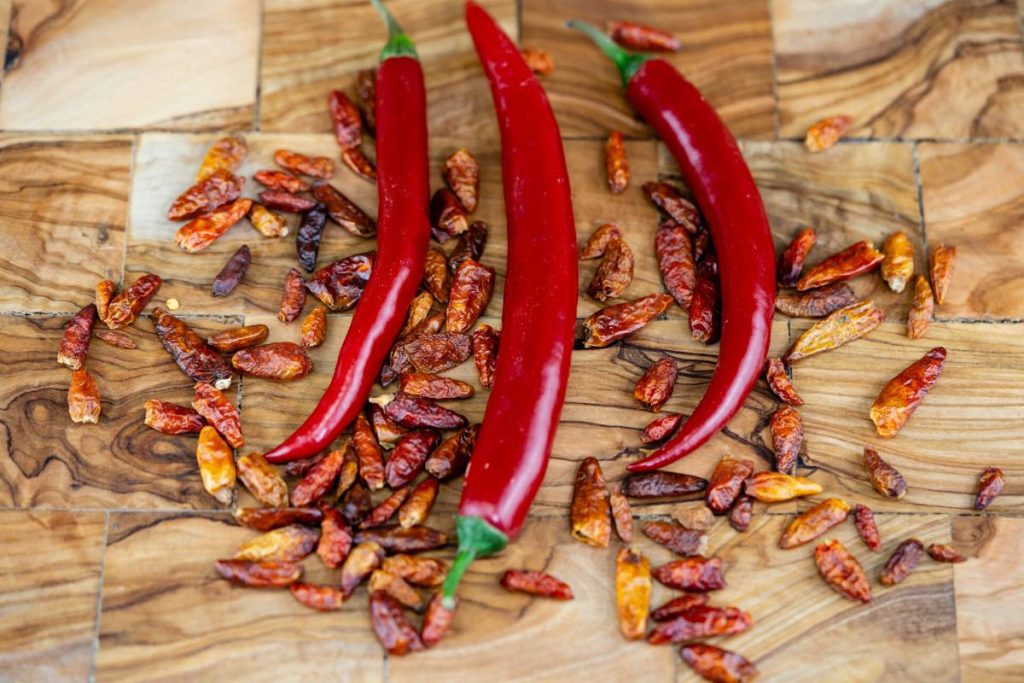
Dried peppers can become powders, flakes, pastes, or sauces.
Some varieties are smoked before grinding.
Others are pickled, fermented, roasted, or cooked fresh.
Paprika can add color and flavor to roasted vegetables.
A small amount of chili powder can deepen the seasoning in a bean stew.
Fresh chilies can brighten a tomato salsa.
Chili flakes can add warmth to a simple vegetable dish.
Over centuries, cooks discovered that chili peppers could complement ingredients already central to their cuisines.
Rather than replacing existing food traditions, chilies became part of them.
The Let’s Veg Way
At Let’s Veg, we enjoy discovering how familiar ingredients developed their place in everyday cooking.
Chili peppers are a wonderful example because they work with so many vegetables.
A little chili can bring warmth to roasted cauliflower, add character to a tomato sauce, or create a flavorful dipping sauce for fresh vegetables.
You don’t have to enjoy extremely spicy food to appreciate them.
Start with a small amount and choose a variety that suits your preferences.
Mild paprika, fresh jalapeños, dried chili flakes, and hotter peppers all offer different possibilities.
And if you’re cooking for several people, consider serving additional chili on the side so everyone can adjust the heat.
Simple vegetable cooking becomes more interesting when you understand the ingredients you’re using.
Final Thoughts
Chili peppers began their journey in the Americas, where Indigenous communities cultivated and cooked with them for thousands of years.
After the late fifteenth century, they traveled through expanding global trade networks and gradually became established in kitchens across Europe, Africa, and Asia.
Along the way, they helped transform Indian curries, Chinese regional dishes, Korean kimchi, Thai sauces, North African condiments, and European seasonings.
Today, these foods are so closely associated with chili peppers that it’s easy to forget the ingredient once came from somewhere else.
That’s what makes the history of food so interesting.
Ingredients travel, cultures adapt them, and new traditions develop.
The next time you sprinkle chili flakes over roasted vegetables or add a fresh pepper to a sauce, you’re using an ingredient whose journey helped change cooking around the world.
Cook Simple • Eat Together
Start with the Vegetable Cooking Guide:
https://www.letsveg.com/vegetable-cooking-guide