

Pesto is known for its fresh basil aroma, but adding avocado changes both its texture and the way it coats pasta. The avocado creates a creamy consistency that clings to the pasta, while basil, garlic, and lemon provide the familiar flavors of pesto.
One of the advantages of avocado pesto is that the sauce does not need to be cooked. The ingredients are blended until smooth and then combined with freshly cooked pasta.
The warmth of the pasta gently softens the sauce, allowing it to coat each piece without exposing the avocado to prolonged heat.
Fresh cherry tomatoes add an important contrast. Their juicy sweetness balances the richness of the avocado and the slightly sharp flavor of the garlic.
The tomatoes are added raw rather than roasted, preserving their fresh texture and bright color. When lightly tossed with olive oil and lemon juice, they provide small bursts of flavor throughout the dish.
Pine nuts contribute the traditional nutty flavor associated with pesto, while vegetarian Parmesan-style cheese adds a savory finish.
The most important detail is the consistency of the sauce. Avocado pesto should be creamy enough to coat the pasta without becoming excessively thick. A little reserved pasta cooking water helps loosen the sauce while allowing it to cling to the noodles.
This pasta is particularly suitable for a quick lunch or weeknight dinner, especially when fresh basil and ripe avocados are available.
Start with the Vegetable Cooking Guide:
https://www.letsveg.com/vegetable-cooking-guide
Video
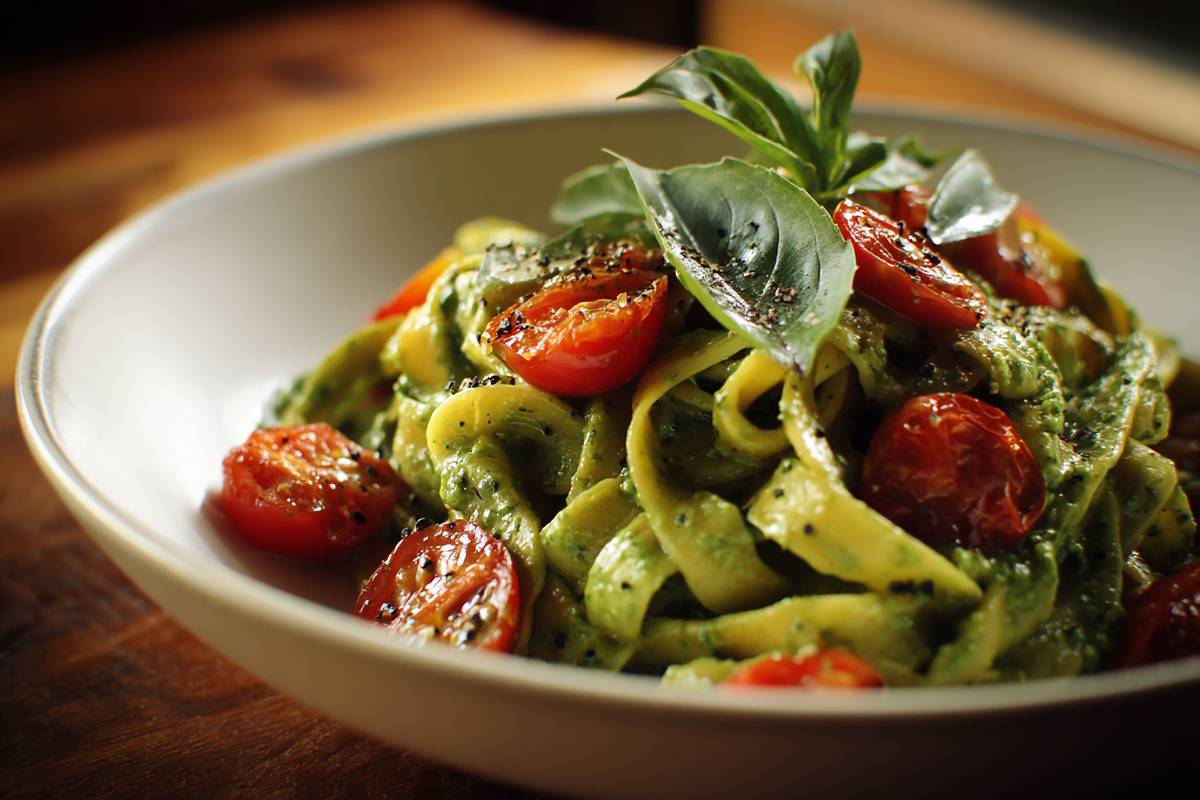
Creamy Avocado Pesto Pasta
Ingredients

Equipment


Cooking Instructions
- Bring a large pot of generously salted water to a boil over high heat.
- Add the pasta and cook according to the package instructions until al dente. The pasta should be tender but retain a slight firmness when bitten.
- While the pasta cooks, place the pine nuts in a small dry skillet over medium-low heat. Toast for approximately 2-3 minutes, stirring frequently, until lightly golden and fragrant. Remove from the heat immediately and allow them to cool slightly.
- Wash the fresh basil leaves and pat them dry with a clean kitchen towel. Remove any thick stems.
- Cut the avocados in half lengthwise, remove the pits, and scoop the flesh into a food processor or blender.
- Add the basil leaves, toasted pine nuts, garlic cloves, vegetarian Parmesan-style cheese, olive oil, lemon juice, lemon zest, salt, and black pepper.
- Blend the ingredients until a smooth, creamy pesto forms. Stop occasionally to scrape down the sides of the food processor.
- If the mixture is too thick, add 1-2 tablespoons of water and blend again. The pesto should be creamy and spreadable rather than stiff.
- Taste the avocado pesto and adjust the lemon juice, salt, or black pepper if necessary. Set aside while preparing the tomatoes.
- Wash the cherry tomatoes and cut them in half. If using larger cherry tomatoes, cut them into quarters.
- Place the tomatoes in a small mixing bowl and add the olive oil, lemon juice, salt, and black pepper.
- Toss gently until the tomatoes are lightly coated with the dressing. Set aside without refrigerating while the pasta finishes cooking.
- Before draining the pasta, carefully reserve approximately ½ cup of the hot pasta cooking water.
- Drain the pasta thoroughly and transfer it to a large mixing bowl. Allow it to stand for approximately 1 minute so it is hot but no longer steaming heavily.
- Add the avocado pesto to the pasta and toss gently with tongs or a large spoon until the pasta is evenly coated.
- Gradually add 2–4 tablespoons of the reserved pasta cooking water, tossing between additions, until the pesto becomes silky and coats the pasta without forming thick clumps.
- Add approximately three-quarters of the seasoned cherry tomatoes and gently fold them into the pasta.
- Taste the pasta and adjust the seasoning if necessary. Add a small squeeze of lemon juice if a brighter flavor is desired.
- Transfer the pasta to a large serving bowl or divide it among four individual plates.
- Arrange the remaining fresh cherry tomatoes over the top.
- Sprinkle with the additional vegetarian Parmesan-style cheese, toasted pine nuts, and fresh basil leaves.
- Finish with freshly ground black pepper and serve immediately.
Nutrition
Notes
Avoid cooking the avocado pesto: Unlike tomato-based pasta sauces, avocado pesto should not be simmered. Prolonged heating can dull its fresh flavor and affect its color. Toss the sauce with hot pasta off the heat instead.
Use pasta water to adjust consistency: Avocado pesto thickens easily because of the avocado's natural texture. Add reserved pasta cooking water gradually until the sauce becomes smooth and evenly coats the pasta. Avoid adding too much at once, which can make the sauce watery.
Keep the cherry tomatoes fresh: Raw cherry tomatoes provide a juicy contrast to the creamy pesto. Add them after the pasta has been coated with the sauce rather than blending them into the pesto. This preserves their texture and prevents excess moisture from thinning the sauce.
Choose vegetarian hard cheese: Traditional Parmigiano Reggiano is made with animal rennet. For a vegetarian recipe, use a Parmesan-style hard cheese made with microbial or vegetarian rennet. For a dairy-free variation, omit the cheese and add 1–2 tablespoons of nutritional yeast to the pesto.
Storage and serving: Avocado pesto is best enjoyed immediately because exposure to air gradually causes browning. Lemon juice helps slow this process but does not prevent it completely. Refrigerate leftovers promptly in an airtight container with minimal air space and use within 1-2 days for the best quality. Serve leftovers chilled or allow them to warm slightly without reheating aggressively.