

Winter Foods That Have Fed Families for Centuries
Imagine winter before supermarkets.
No produce section filled with vegetables shipped from warmer climates.
No freezer stocked with frozen peas and broccoli.
No refrigerator keeping fresh food available for weeks.
For most of human history, winter changed the way families ate.
People depended on foods that could survive the cold months: potatoes and other root vegetables, cabbage, dried beans, lentils, grains, preserved vegetables, onions, and whatever had been stored from the harvest.
These weren’t trendy “winter foods.”
They were survival foods.
And something remarkable happened along the way.
The ingredients people depended on because they had to eventually became some of the world’s most comforting and beloved meals.
Winter Once Began Months Earlier
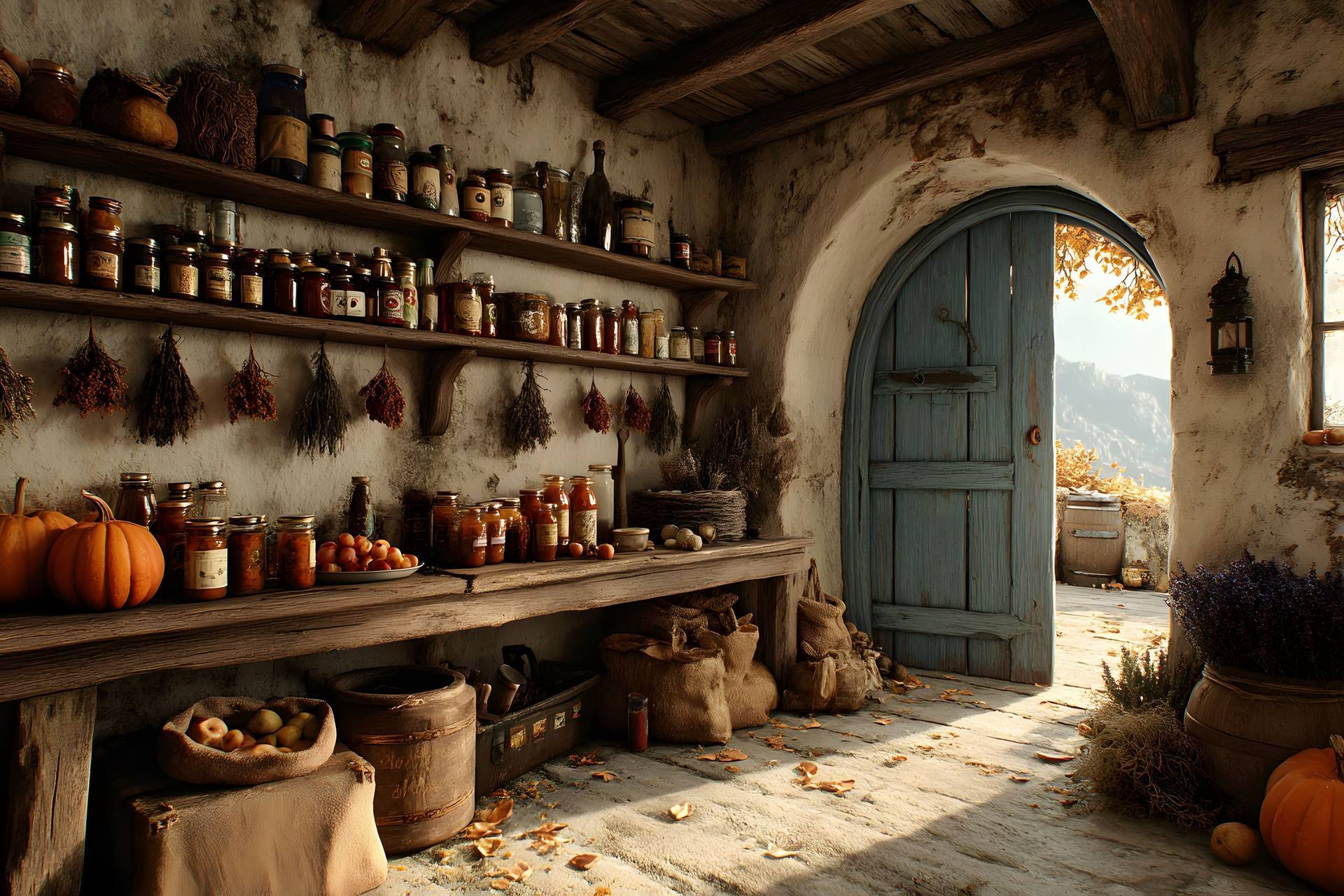
Preparing for winter didn’t begin when the first snow fell.
It began during the harvest.
Families dried beans and grains.
Vegetables were stored in cool places.
Cabbage was fermented.
Foods were salted, dried, pickled, or otherwise preserved.
The question wasn’t simply:
What should we have for dinner tonight?
It was:
How do we make what we have last until spring?
That necessity shaped cuisines around the world.
Potatoes: The Humble Winter Survivor
Few foods represent practical winter cooking better than potatoes.
When stored under suitable cool, dark conditions, potatoes could remain available long after many fresh vegetables disappeared.
They were filling, versatile, and could become:
- soups
- stews
- mashed potatoes
- roasted dishes
- pancakes
- dumplings
- casseroles
Across Europe and eventually many other parts of the world, potatoes became deeply connected to everyday family cooking.
Today we may think of mashed potatoes or potato soup as comfort food.
For earlier generations, potatoes were something even more important:
Food that was still there when winter wasn’t over.
Cabbage: Built for the Cold Months
Cabbage doesn’t always receive much attention.
Historically, however, it was extraordinarily useful.
A whole cabbage stores better than many delicate vegetables, and people discovered another way to extend its usefulness even further:
Fermentation.
In parts of Europe, cabbage became sauerkraut.
In Korea, vegetables including cabbage became kimchi through distinctive fermentation traditions.
Different cultures.
Different flavors.
But behind them was a similar human challenge: preserving food.
What began partly as necessity eventually became culinary tradition.
Beans and Lentils: Small Foods That Fed Families
Dried beans and lentils had another enormous advantage.
They didn’t require a refrigerator.
Stored dry, they could wait in the pantry until needed and then become filling meals when fresh ingredients were limited.
Add onions.
Add carrots.
Add potatoes.
Add herbs.
Add water or broth.
Suddenly a handful of inexpensive ingredients could feed an entire family.
That’s one reason bean and lentil soups appear in so many cuisines.
They weren’t invented for food photography.
They solved a problem.
Grains Made Winter Meals Possible
Rice, oats, barley, wheat, cornmeal, and other grains have supported civilizations for generations.
Unlike many fresh foods, properly dried grains could be stored.
They became porridge, bread, rice dishes, soups, dumplings, and countless other meals.
A grain combined with beans or lentils could stretch limited ingredients even further.
Many traditional dishes we enjoy today grew from this kind of practical cooking.
People learned how to turn simple staples into satisfying meals because they needed those meals to last.
Onions and Garlic: Flavor Waiting in Storage
Winter cooking wasn’t only about filling the stomach.
Food still had to taste good.
Onions and garlic became invaluable because they could be stored and used to build flavor in countless dishes.
Think about how many traditional meals begin the same way:
An onion goes into the pot.
Garlic follows.
Then vegetables, beans, lentils, grains, herbs, or spices are added.
Before expensive sauces and endless supermarket choices, cooks learned how to create remarkable flavor from basic ingredients.
We still cook that way today.
Soup May Be the Ultimate Winter Food
If you have a little of everything but not enough of anything, make soup.
That idea has probably fed families for centuries.
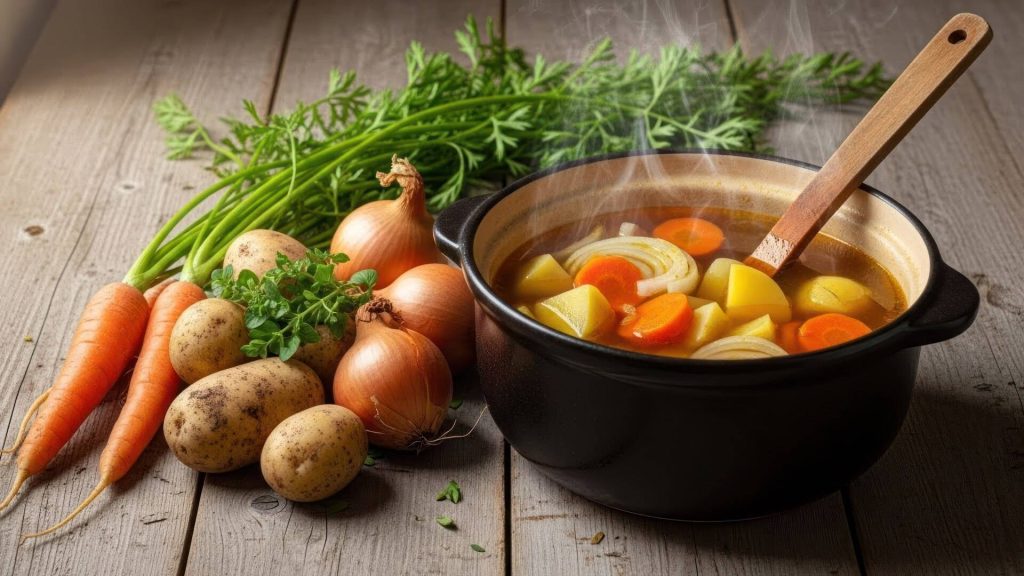
A few potatoes.
An onion.
Some cabbage.
A handful of beans.
Yesterday’s vegetables.
Water, herbs, and time.
Soup allowed cooks to stretch ingredients, use foods that might otherwise be wasted, and feed several people from one pot.
Perhaps that’s one reason almost every culture seems to have its own traditional soups.
Soup wasn’t merely warming.
It was practical.
Preservation Changed Flavor
Something else happened when people preserved food for winter.
They created new flavors.
Fermented cabbage doesn’t taste like fresh cabbage.
Pickled vegetables don’t taste like vegetables straight from the garden.
Dried beans become the foundation of rich stews.
Stored root vegetables develop into roasted dishes and soups.
Preservation wasn’t simply about keeping food edible.
Over generations, people began appreciating the flavors preservation created.
Necessity became tradition.
Tradition became cuisine.
Winter Food Around the World
The ingredients differed depending on geography, but the challenge was universal.
Families used what their land and climate provided.
In Northern and Eastern Europe, root vegetables, cabbage, grains, and preserved foods became essential.
Across parts of Asia, rice, noodles, fermented vegetables, dried foods, and legumes helped sustain households.
Throughout the Mediterranean and Middle East, lentils, chickpeas, beans, grains, olive oil, and preserved ingredients became foundations of everyday cooking.
Different cultures found different answers to the same question:
How do we feed everyone when fresh food is harder to find?
Those answers created some of the world’s great traditional dishes.
We Still Eat Winter Food-Even When We Don’t Need To
Today, supermarkets have changed winter.
Tomatoes can appear in January.
Frozen vegetables are available year-round.
Produce can travel thousands of miles before reaching us.
Most of us no longer need to organize our entire diet around surviving until the next harvest.
Yet when the weather turns cold, what do we crave?
Soup.
Stew.
Potatoes.
Lentils.
Fresh bread.
Casseroles.
The foods that helped previous generations through winter became the foods we associate with warmth, home, and comfort.
That may be their greatest legacy.
The Let’s Veg Way
At Let’s Veg, we love discovering that some of the simplest foods have the longest stories.
A potato doesn’t look extraordinary.
Neither does a cabbage, onion, bowl of lentils, or bag of beans.
But these humble ingredients have fed families through winters, difficult times, and generations of change.
They remind us that good cooking doesn’t always begin with expensive ingredients.
Sometimes it begins by looking at what you already have and asking:
What can I make from this?
People have been answering that question for centuries.
And many of their answers are still on our tables today.
Modern kitchens have conveniences our ancestors could hardly have imagined.
But winter food still teaches us something valuable.
Store wisely.
Waste less.
Use simple ingredients.
Make enough to share.
And never underestimate what can come from a pot filled with vegetables, beans, grains, herbs, and a little time.
The foods that once helped families survive winter didn’t disappear when supermarkets arrived.
They became part of our traditions.
They became comfort food.
And generation after generation, they continue bringing people back to the table.
Cook Simple • Eat Together
Start with the Vegetable Cooking Guide:
https://www.letsveg.com/vegetable-cooking-guide