

Cranberry sauce is one of the simplest homemade holiday dishes, yet its flavor is remarkably distinctive. Fresh cranberries have a naturally sharp, tart taste that becomes pleasantly balanced when cooked with sugar.
Unlike many fruit sauces, cranberry sauce does not require added cornstarch or other thickeners. Cranberries naturally contain pectin, which helps the sauce thicken as it cooks and cools.
One of the most recognizable parts of making cranberry sauce is hearing the berries pop as they heat. Their skins split, releasing bright red juices that gradually develop into a glossy, ruby-colored sauce.
Fresh orange is a particularly good companion to cranberries. Orange juice adds gentle sweetness and acidity, while the zest contributes a fragrant citrus aroma without introducing too much liquid.
A cinnamon stick adds subtle warmth. Simmering the whole stick with the cranberries allows its flavor to develop gradually, producing a more delicate result than adding a large amount of ground cinnamon.
The texture can be adjusted according to preference. Leaving some cranberries whole creates a rustic, chunky sauce, while cooking and stirring them longer produces a smoother consistency.
Another advantage of cranberry sauce is that it can be prepared ahead of time. Its flavor develops as it cools, and the sauce becomes thicker after several hours in the refrigerator.
Although cranberry sauce is traditionally associated with holiday meals, it is also useful beyond Thanksgiving. Its sweet-tart flavor pairs well with baked Brie, vegetarian sandwiches, roasted vegetables, and cheese boards.
A spoonful can also be added to plain yogurt or served alongside warm breakfast dishes.
This homemade version uses only a few ingredients and allows the natural flavor of cranberries to remain the centerpiece.
Start with the Vegetable Cooking Guide:
https://www.letsveg.com/vegetable-cooking-guide
Video
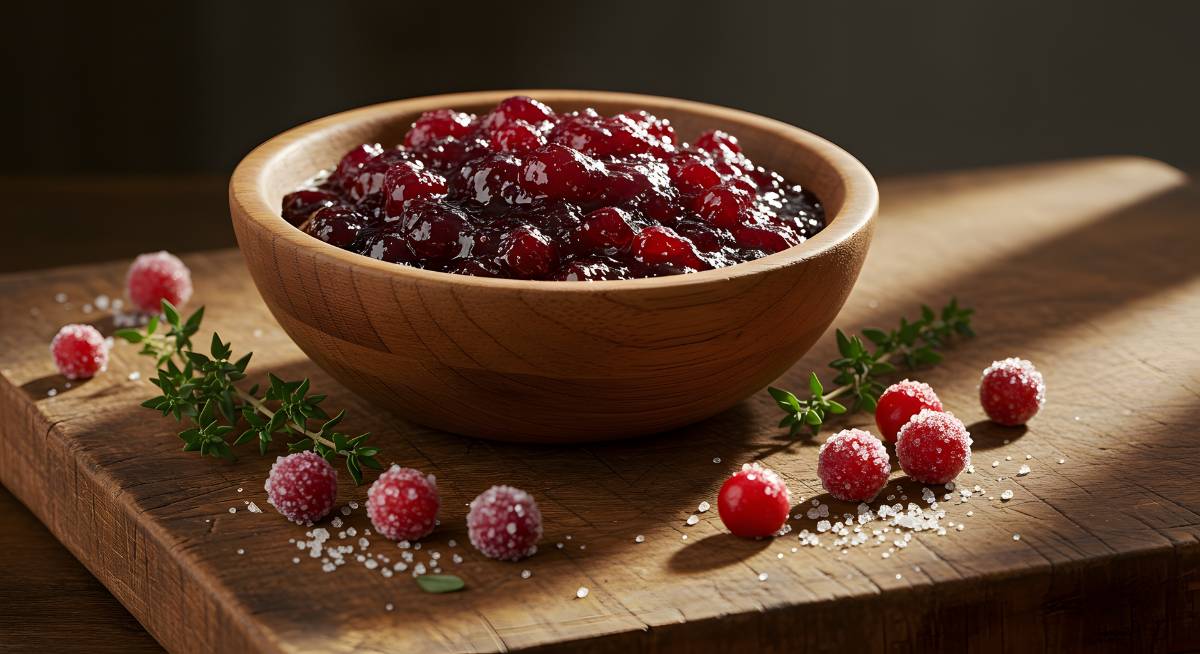
Cranberry Sauce with Fresh Orange and Cinnamon
Ingredients

Equipment

Cooking Instructions
- Place the fresh cranberries in a colander and rinse thoroughly under cold running water.
- Remove any soft, damaged, or discolored cranberries, along with any remaining stems.
- Allow the cranberries to drain while preparing the remaining ingredients.
- Wash the orange thoroughly and finely grate enough of the outer peel to obtain 1 teaspoon of zest. Avoid grating the white pith underneath, as it can introduce bitterness.
- Cut the orange in half and squeeze enough juice to measure ½ cup. Remove any seeds.
- Place the granulated sugar, orange juice, and water in a medium saucepan.
- Set the saucepan over medium heat and stir gently until the sugar begins to dissolve.
- Add the rinsed cranberries, orange zest, cinnamon stick, and salt.
- Stir to combine the ingredients and bring the mixture to a gentle boil.
- Reduce the heat to medium-low and allow the cranberries to simmer uncovered.
- Cook for approximately 10–12 minutes, stirring occasionally to prevent the sugar from sticking to the bottom of the saucepan.
- As the cranberries heat, their skins will begin to split and pop. Continue cooking until most of the berries have burst and the liquid becomes slightly thickened.
- Use the back of a wooden spoon to gently press some of the softened cranberries against the side of the saucepan.
- For a chunkier sauce, leave several cranberries intact. For a smoother texture, mash more of the berries as they cook.
- Continue simmering for another 2-3 minutes, until the sauce reaches a thick but still pourable consistency.
- Remember that cranberry sauce thickens considerably as it cools, so avoid cooking it until it becomes excessively stiff.
- Remove the saucepan from the heat.
- Carefully remove and discard the cinnamon stick.
- Taste a small spoonful after allowing it to cool slightly. If the sauce is too tart, stir in the optional maple syrup until dissolved.
- Add the optional lemon juice if a brighter, slightly sharper flavor is desired.
- Transfer the cranberry sauce to a heatproof serving bowl.
- Allow it to cool at room temperature for approximately 30 minutes, stirring occasionally to release excess heat.
- Serve slightly warm if preferred or refrigerate until completely chilled and thickened.
- Before serving, stir the sauce gently to loosen its consistency.
- Garnish with a little fresh orange zest or a small rosemary sprig if desired.
- Serve alongside your favorite holiday dishes or use as a sweet-tart condiment for vegetarian meals.