Ingredients

Equipment

soup pot with lid
Cooking Instructions
- Heat 2 tablespoons of olive oil in a large soup pot over medium heat until the oil begins to shimmer.
- Add the diced onion and carrots. Cook for 5-6 minutes, stirring occasionally, until the onion becomes translucent and the carrots begin to soften.
- Add the minced garlic and cook for another 30 seconds, stirring continuously to prevent burning.
- Stir in the tomato paste and cook for approximately 1 minute. The paste should darken slightly and develop a richer aroma.
- Add the crushed tomatoes, vegetable broth, and water. Stir well, scraping the bottom of the pot to release any tomato paste that has stuck to the surface.
- Season with oregano, thyme, paprika, black pepper, and salt. Bring the soup to a gentle boil, then reduce the heat and simmer uncovered for 10 minutes.
- Taste the tomato broth. If the tomatoes are particularly acidic, add up to 1 teaspoon of sugar. Adjust the salt and pepper as needed.
- Break the dry spaghetti into approximately 2-inch pieces and add them directly to the simmering soup. Stir immediately to prevent the pasta from sticking together.
- Continue simmering for approximately 9-12 minutes, or according to the spaghetti package directions, stirring occasionally. The spaghetti should be tender but retain a slight bite. Add a little hot water or vegetable broth if the soup becomes too thick.
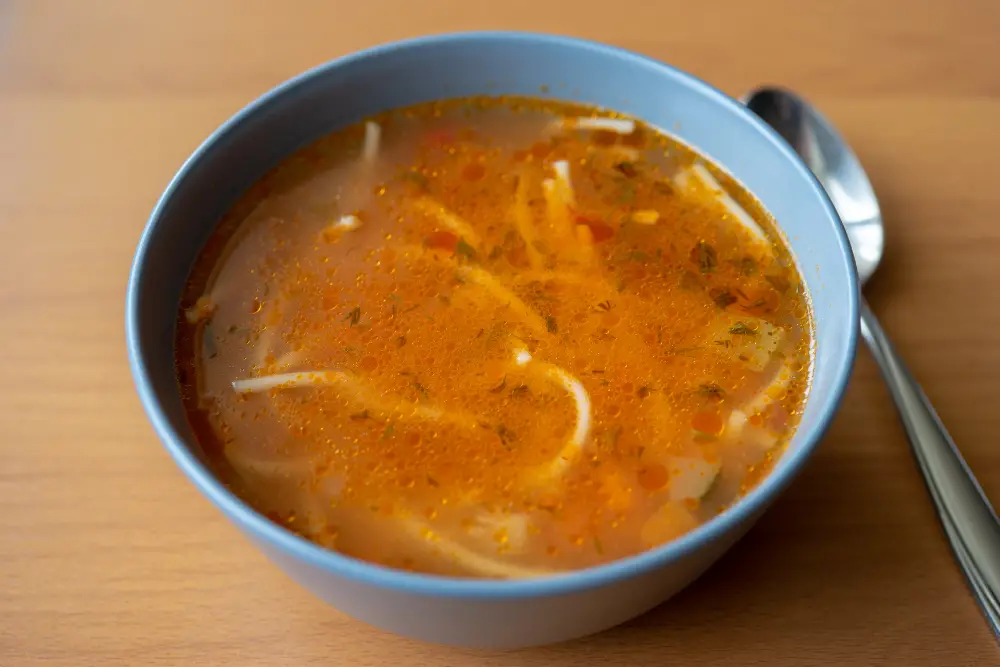
- Turn off the heat and stir in the chopped basil and remaining tablespoon of olive oil. Ladle into bowls and garnish with parsley or vegetarian Parmesan-style cheese if desired. Serve while hot.
Nutrition
Notes
Break the spaghetti before cooking: Pieces approximately 2 inches long are easier to eat with a spoon. Breaking the pasta inside a clean kitchen towel helps prevent dry pieces from scattering across the counter.
Watch the broth consistency: Spaghetti absorbs liquid as it cooks. If the soup becomes thicker than desired, add hot vegetable broth or water in small amounts until it reaches the preferred consistency.
Avoid overcooking the pasta: Begin checking the spaghetti about 2 minutes before the package's suggested cooking time. It should be tender with a slight bite, not soft or mushy.
Choose tomatoes carefully: Good-quality crushed tomatoes provide the base flavor. If using whole canned tomatoes instead, crush them by hand or with a spoon before adding them to the pot.
For make-ahead meals: Cook and refrigerate the spaghetti separately, then add it to individual portions when reheating. This prevents the pasta from absorbing too much broth during storage.
Storage and reheating: Refrigerate leftovers in a covered container for up to 3-4 days. Reheat gently on the stovetop, adding vegetable broth or water to loosen the soup if necessary.
Watch the broth consistency: Spaghetti absorbs liquid as it cooks. If the soup becomes thicker than desired, add hot vegetable broth or water in small amounts until it reaches the preferred consistency.
Avoid overcooking the pasta: Begin checking the spaghetti about 2 minutes before the package's suggested cooking time. It should be tender with a slight bite, not soft or mushy.
Choose tomatoes carefully: Good-quality crushed tomatoes provide the base flavor. If using whole canned tomatoes instead, crush them by hand or with a spoon before adding them to the pot.
For make-ahead meals: Cook and refrigerate the spaghetti separately, then add it to individual portions when reheating. This prevents the pasta from absorbing too much broth during storage.
Storage and reheating: Refrigerate leftovers in a covered container for up to 3-4 days. Reheat gently on the stovetop, adding vegetable broth or water to loosen the soup if necessary.