Ingredients

Equipment

Baking Sheet

soup pot with lid
Cooking Instructions
- Preheat the oven to 425°F (220°C). Position two oven racks in the upper and lower thirds of the oven.
- Wash all the vegetables thoroughly and pat them dry with a clean kitchen towel.
- Trim the woody ends from the asparagus. Leave thin asparagus spears whole, or cut thicker spears into 2-3-inch pieces.
- Cut the broccoli into small, evenly sized florets. Slice the zucchini into half-moons approximately ½ inch thick.
- Remove the stems and seeds from the bell peppers, then slice them into strips. Leave the cherry tomatoes whole so they retain their juices during roasting.
- Place the broccoli, zucchini, and bell peppers in a large mixing bowl. Add 2 tablespoons of olive oil, the salt, black pepper, oregano, and garlic powder.
- Toss until the vegetables are evenly coated.
- Divide the vegetables between the two baking sheets, spreading them into single layers. Leave some space between the pieces to encourage browning.
- Place the baking sheets in the preheated oven and roast for approximately 12 minutes.
- Meanwhile, bring a large pot of generously salted water to a boil.
- Add the farfalle pasta and cook according to the package instructions until al dente, usually approximately 10-12 minutes.
- While the pasta cooks, place the asparagus and cherry tomatoes in a separate bowl. Drizzle with the remaining tablespoon of olive oil and toss gently.
- After the first 12 minutes of roasting, remove the baking sheets from the oven.
- Turn the broccoli, zucchini, and peppers with a spatula, then distribute the asparagus and cherry tomatoes between the baking sheets.
- Return the vegetables to the oven, switching the positions of the baking sheets for more even cooking.
- Continue roasting for approximately 10-12 minutes, until the broccoli is tender with lightly browned edges, the peppers have softened, and the cherry tomatoes begin to blister.
- Remove the vegetables from the oven and allow them to cool slightly.
- When the pasta is cooked, drain it in a colander. Rinse briefly under cool running water to stop the cooking process, then drain thoroughly.
- Transfer the pasta to a large mixing bowl and drizzle with a small amount of the prepared dressing once it is ready to prevent sticking.
- In a small mixing bowl, combine the olive oil, lemon juice, Dijon mustard, minced garlic, lemon zest, oregano, salt, and black pepper.
- Whisk until the dressing is well combined and slightly emulsified.
- Add the roasted broccoli, zucchini, bell peppers, and asparagus to the pasta.
- Gently fold the vegetables into the farfalle using a large spoon or kitchen tongs.
- Add the roasted cherry tomatoes carefully, keeping as many of them whole as possible.
- Pour approximately three-quarters of the lemon herb dressing over the pasta and vegetables.
- Toss gently until the ingredients are evenly coated.
- Allow the mixture to cool for approximately 10 minutes if still warm, then add the torn radicchio and chopped parsley.
- Add the remaining dressing as needed and toss lightly. Taste and adjust the salt, lemon juice, or black pepper.
- Transfer the pasta salad to a large serving bowl.
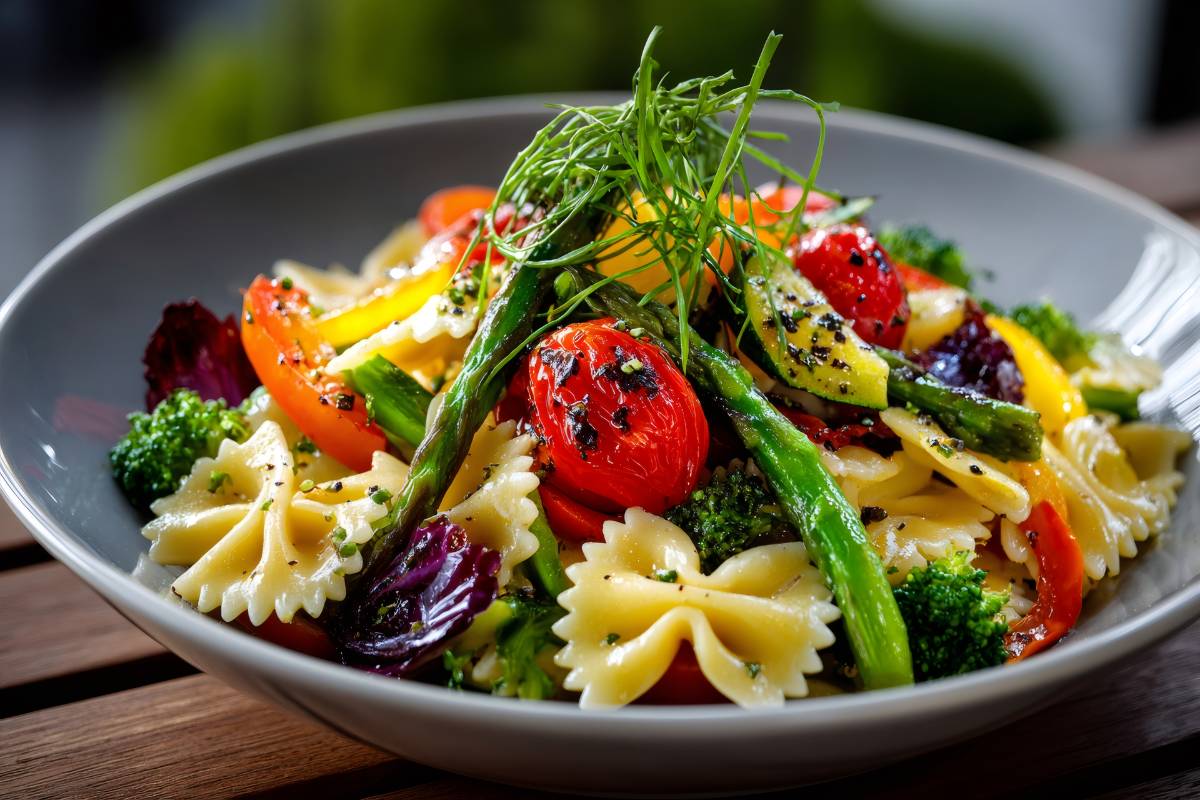
- Arrange several asparagus spears and roasted cherry tomatoes over the top for an attractive presentation.
- Sprinkle with chopped fresh dill and garnish with a few delicate dill sprigs.
- Add the optional vegetarian Parmesan-style cheese just before serving.
- Serve slightly warm, at room temperature, or chilled.
Nutrition
Notes
Use farfalle for the best presentation: Bow-tie pasta matches the appearance of the photographed dish and holds the roasted vegetables and dressing well. Fusilli or penne can be substituted, but the finished salad will have a different appearance and texture.
Roast vegetables according to their cooking times: Broccoli and bell peppers generally require more time than asparagus and cherry tomatoes. Adding the quicker-cooking vegetables partway through roasting helps prevent them from becoming overly soft.
Avoid overcrowding the baking sheets: Vegetables release moisture as they cook. When packed too closely together, they steam rather than roast. Use two large baking sheets and spread the vegetables into single layers to encourage lightly browned edges.
Keep the cherry tomatoes whole: Whole cherry tomatoes blister and soften while retaining much of their juice. Cutting them before roasting can release too much moisture onto the baking sheet and make the vegetables less crisp.
Add radicchio after roasting: The purple leaves visible in the photograph resemble radicchio or another red leafy green. Radicchio is used here to provide a similar color and a slightly bitter contrast. Adding it after the roasted vegetables have cooled slightly helps preserve its color and texture.
Make ahead and storage: The pasta and roasted vegetables can be prepared several hours in advance. For the freshest flavor, add the dressing, radicchio, and herbs shortly before serving. Refrigerate leftovers promptly in an airtight container for up to 3 days. Add a little fresh lemon juice or olive oil before serving if the pasta has absorbed most of the dressing.