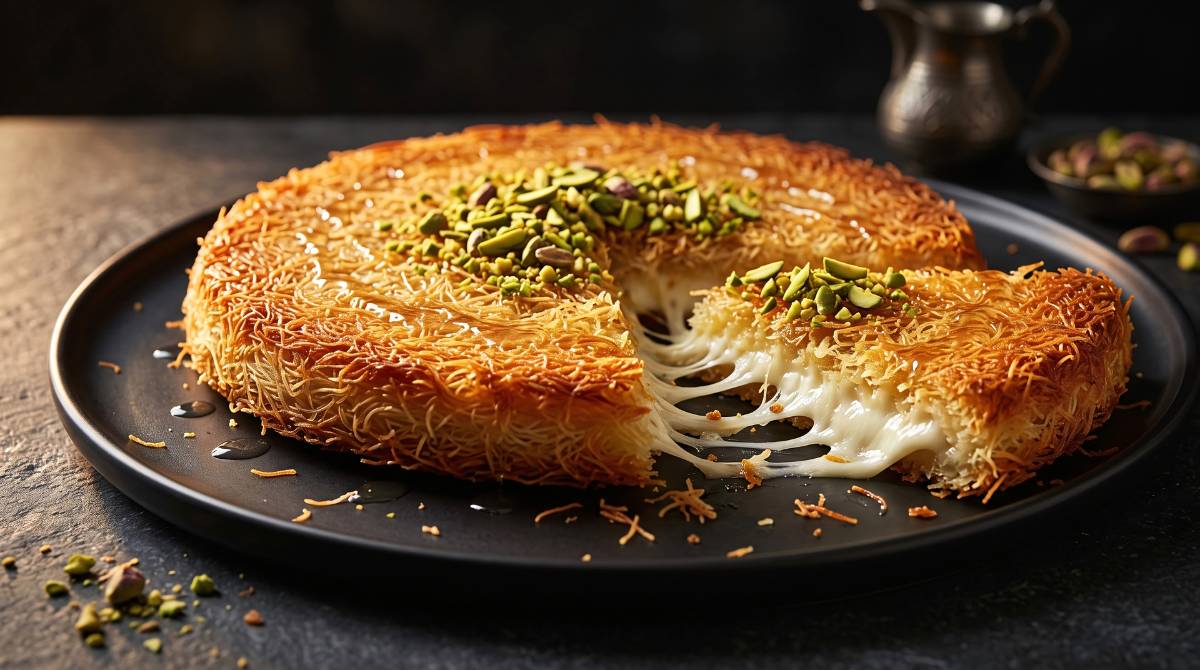
Ingredients

Equipment
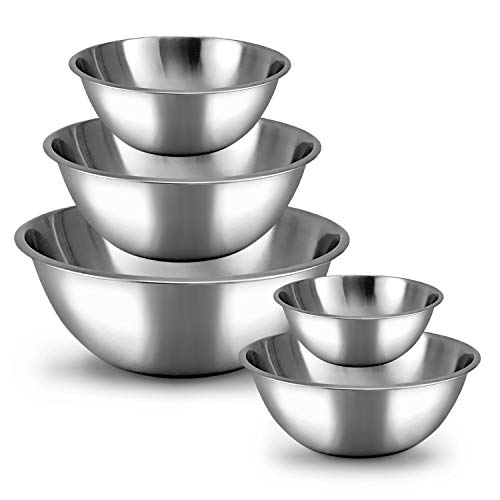
Mixing bowl

small soup pot
Cooking Instructions
- Preheat the oven to 375°F (190°C). Generously grease the bottom and sides of a 10-inch round baking pan with 1 tablespoon of softened or melted butter.
- Place the sugar and water for the syrup into a small saucepan. Stir gently over medium heat until the sugar dissolves.
- Bring the mixture to a gentle boil, then reduce the heat and simmer for approximately 8–10 minutes, until the syrup thickens slightly but remains pourable.
- Add the lemon juice and stir gently. Remove the saucepan from the heat and allow the syrup to cool for several minutes.
- Stir in the orange blossom water and optional rose water. Set the syrup aside to cool while preparing the pastry.
- Remove the fully thawed kataifi pastry from its packaging and place it in a large mixing bowl.
- Using clean kitchen scissors or a sharp knife, cut the long pastry strands into shorter pieces, approximately 1-2 inches in length. Gently separate the strands with your fingers to loosen any tightly packed sections.
- Pour the melted butter over the shredded pastry. Using clean hands, gently lift and toss the strands until the butter is distributed throughout. Take care to coat the pastry evenly, including the strands at the bottom of the bowl.
- If using the optional tablespoon of sugar, sprinkle it over the buttered pastry and toss again.
- Transfer approximately two-thirds of the pastry to the prepared baking pan.
- Spread the pastry evenly across the bottom of the pan and press it down firmly with the bottom of a measuring cup or a flat spatula. The compact layer will help the finished kunafa hold together when sliced.
- In a separate mixing bowl, combine the shredded mozzarella, drained ricotta, 1 tablespoon sugar, and optional orange blossom water.
- Mix gently until the cheeses are evenly distributed.
- Spread the cheese mixture over the pressed pastry, leaving approximately ½ inch of space around the outer edge of the pan. Keeping the filling away from the sides helps prevent melted cheese from sticking to the pan.
- Distribute the remaining buttered kataifi pastry over the cheese filling, covering it in an even layer.
- Press the upper pastry layer very gently to help it settle without compressing the cheese filling excessively.
- Place the baking pan on the middle rack of the preheated oven.
- Bake for approximately 30–35 minutes, until the pastry becomes deeply golden and crisp around the edges and the cheese filling is completely melted.
- If the top remains pale near the end of baking, increase the oven temperature to 400°F (200°C) for the final 3–5 minutes, watching closely to prevent burning.
- Remove the kunafa from the oven and allow it to rest for approximately 2 minutes.
- While the pastry is still hot, slowly drizzle approximately two-thirds of the cooled sugar syrup over the surface, allowing it to absorb gradually.
- Let the kunafa stand for another 3-5 minutes so the syrup can settle into the pastry.
- Sprinkle the finely chopped pistachios evenly over the top, concentrating them toward the center if a traditional decorative appearance is desired.
- Add the remaining roughly chopped pistachios and optional dried rose petals.
- Cut the warm kunafa into wedges using a sharp knife.
- Serve immediately while the cheese is soft and melted, with the remaining sugar syrup offered on the side for anyone who prefers additional sweetness.
Nutrition
Notes
Use kataifi pastry, not ordinary phyllo sheets: Kunafa made with shredded kataifi develops its characteristic crisp, threadlike texture. Regular phyllo sheets will produce a different result. Kataifi is commonly sold frozen in Middle Eastern and specialty grocery stores. Thaw it according to the package instructions before separating the strands.
Choose cheese carefully: Traditional Nabulsi or Akkawi cheese can be used when available, but these cheeses may need soaking in cold water to reduce their saltiness. For this adaptation, low-moisture whole-milk mozzarella provides a mild flavor and stretchy melted texture. Avoid fresh mozzarella packed in water because its excess moisture can soften the pastry.
Drain the ricotta: Ricotta adds creaminess but can release moisture during baking. If the cheese appears wet, drain it in a fine-mesh strainer before mixing it with the mozzarella. Excess moisture may prevent the bottom pastry layer from becoming crisp.
Balance the syrup: Kunafa should be sweet without becoming waterlogged. Start with approximately two-thirds of the syrup and serve the remainder separately. Pouring cooled syrup over hot pastry helps it absorb gradually while preserving some of the crisp texture.
Use unsalted pistachios: Finely chopped unsalted pistachios provide the traditional green garnish without introducing unwanted saltiness. For the brightest color, use shelled pistachios with their thin brown skins removed, if available.
Serve warm and reheat carefully: Kunafa tastes best shortly after baking, when the pastry is crisp and the cheese is melted. Refrigerate leftovers promptly in a covered container for up to 3 days. Reheat individual portions in a 325°F (165°C) oven until thoroughly heated. Avoid microwaving when possible, as it can soften the pastry.