Ingredients

Equipment

Nonstick Pizza Tray

Pizza Cutter
Cooking Instructions
- Pour the warm water into a large mixing bowl. Add the sugar and active dry yeast, stir gently, and let stand for 5–10 minutes.
- The mixture should develop a foamy surface, indicating that the yeast is active.
- Add the flour, salt, and olive oil to the yeast mixture.
- Stir until a rough dough forms. If the dough is excessively sticky, add a little additional flour, one tablespoon at a time.
- Transfer the dough to a lightly floured surface.
- Knead for approximately 8-10 minutes until smooth, elastic, and slightly tacky.
- The dough should stretch without tearing immediately and should no longer feel excessively sticky.
- Lightly oil a clean mixing bowl and place the dough inside.
- Cover with a clean kitchen towel or plastic wrap and leave in a warm location for approximately 60–90 minutes, or until doubled in size.
- While the dough rises, heat 1 tablespoon of olive oil in a small saucepan over medium-low heat.
- Add the minced garlic and cook for approximately 30 seconds.
- Stir in the crushed tomatoes, oregano, basil, salt, black pepper, and optional sugar.
- Simmer gently for 8–10 minutes, stirring occasionally, until slightly thickened.
- Remove from the heat and allow the sauce to cool.
- Place a pizza stone, pizza steel, or heavy baking sheet in the oven.
- Preheat to 475°F (245°C) for at least 30 minutes before baking.
- A thoroughly heated baking surface helps produce a crisp pizza bottom.
- Transfer the risen dough to a lightly floured work surface.
- Press the dough gently to release large air pockets.
- Stretch or roll it into a circle approximately 12 inches wide, leaving a slightly thicker border around the edge.
- Place the shaped dough on a lightly floured pizza peel or a sheet of parchment paper rated for the oven temperature.
- Spread approximately ½–¾ cup of the prepared tomato sauce over the dough.
- Leave a ½-inch border uncovered around the edge.
- Avoid adding too much sauce, which can prevent the center of the crust from baking properly.
- Sprinkle the shredded mozzarella evenly over the sauce.
- Add the optional vegetarian Parmesan-style cheese and dried oregano.
- Drizzle lightly with olive oil.
- Carefully transfer the pizza to the preheated baking surface.
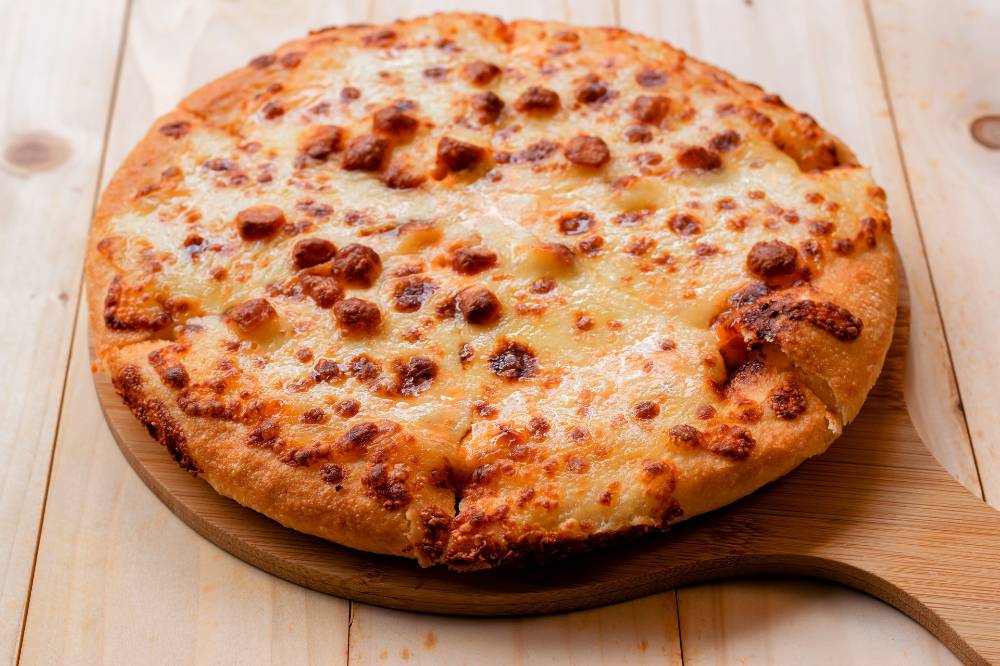
- Bake for approximately 12-15 minutes, until the crust is golden brown, the cheese is bubbling, and the bottom is firm and lightly browned.
- Remove the pizza from the oven and transfer it to a cutting board.
- Allow it to rest for approximately 3 minutes before slicing.
- Add fresh basil leaves if desired.
- Cut into 8 slices and serve while the cheese is warm and melted.
Nutrition
Notes
Choose low-moisture mozzarella: Whole-milk, low-moisture mozzarella melts well and gives the pizza a creamy topping without releasing excessive water. Fresh mozzarella can be used, but it should be sliced thinly and drained thoroughly before baking.
Check the dough before stretching: Properly risen dough should feel soft and elastic. If it repeatedly shrinks back while shaping, cover it and let it rest for 10-15 minutes before trying again.
Avoid excessive tomato sauce: A thin, even layer is enough to flavor the pizza. Too much sauce can leave the center soft, especially when baking in a conventional home oven.
Preheat the baking surface thoroughly: A pizza stone or steel needs time to absorb heat. If using a baking sheet, preheat it upside down so the pizza can slide onto its flat surface more easily.
Look underneath the crust: Melted cheese alone does not mean the pizza is finished. Lift an edge carefully with a spatula to check that the bottom has developed golden-brown spots and is firm enough to support a slice.
Store and reheat leftovers: Refrigerate leftover pizza within 2 hours and use within 3-4 days. Reheat slices in a covered skillet over medium-low heat, then uncover briefly to restore some crispness to the bottom.