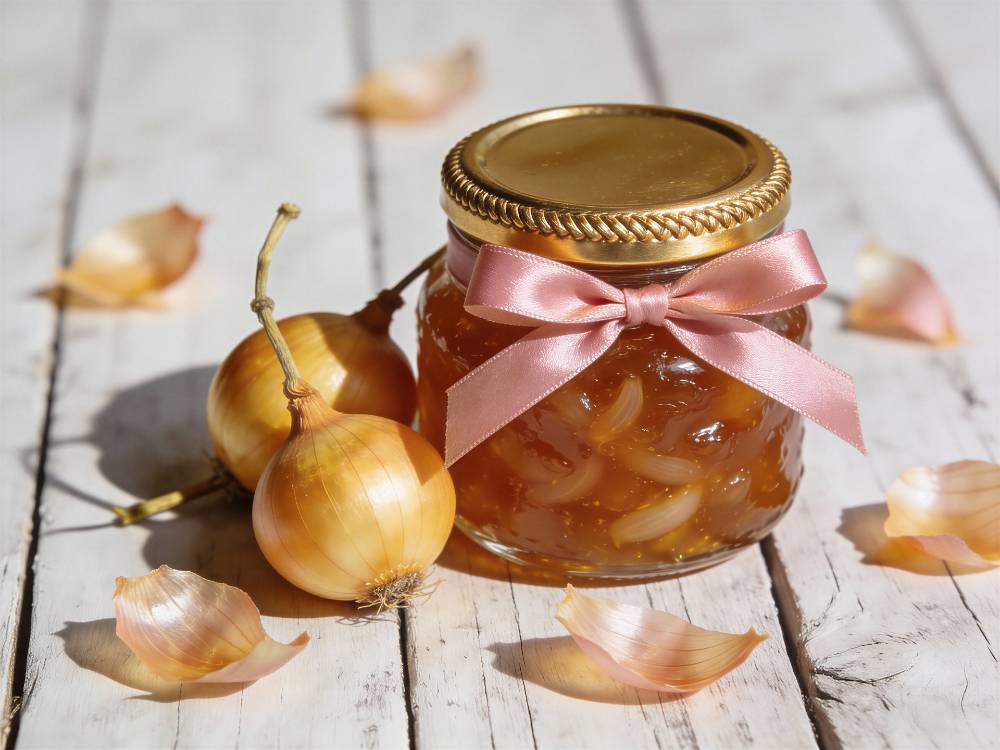
Ingredients

Equipment

Frying Pan

Mason Jars
Cooking Instructions
- Peel the onions and cut them in half from root to stem. Slice each half into thin, even strips, approximately ⅛ inch thick. Try to keep the slices similar in size so they cook evenly.
- Heat the olive oil and butter in a large heavy-bottomed skillet over medium heat until the butter melts and begins to foam gently.
- Add the sliced onions and sprinkle with the salt. Stir thoroughly to coat the onions with the oil and butter.
- Cook the onions over medium heat for approximately 8-10 minutes, stirring occasionally, until they soften and begin releasing their moisture.
- Reduce the heat to medium-low and continue cooking for approximately 25-30 minutes. Stir every few minutes, scraping the bottom of the skillet to prevent sticking.
- As the onions cook, they will gradually reduce in volume and change from pale yellow to golden brown. If the bottom of the skillet becomes too dry or dark, add 1 tablespoon of water and scrape up the browned bits.
- Continue cooking until the onions are deeply golden, very soft, and naturally sweet. Avoid increasing the heat to speed up caramelization, as this can cause the onions to scorch.
- Sprinkle the brown sugar over the caramelized onions and stir until it dissolves and coats the onions evenly.
- Pour in the balsamic vinegar, apple cider vinegar, and ¼ cup water. Stir thoroughly, scraping the bottom of the skillet to incorporate the caramelized flavors.
- Add the fresh thyme leaves, black pepper, and optional bay leaf. Stir to distribute the seasonings throughout the mixture.
- Reduce the heat to low and simmer gently for approximately 10-15 minutes, stirring frequently, until most of the liquid evaporates and the onions develop a thick, glossy consistency.
- If using crushed red pepper flakes or Dijon mustard, stir them into the jam during the final 2 minutes of cooking.
- Check the consistency by drawing a spoon across the bottom of the skillet. The jam should separate briefly before slowly settling back together, with no large amount of free liquid remaining.
- Remove the skillet from the heat and discard the bay leaf if used.
- Taste the onion jam and adjust the seasoning. Add a small splash of balsamic vinegar if a sharper flavor is desired, or a pinch of salt if the sweetness needs balancing.
- Allow the jam to cool for approximately 15 minutes before transferring it to a clean glass storage container.
- Serve warm or at room temperature or refrigerate promptly for later use.
Nutrition
Notes
Choose the right onions: Yellow onions offer a good balance of sweetness and savory flavor. Red onions produce a darker, slightly sweeter-looking jam, while sweet onions such as Vidalia can also work but may require less added sugar.
Caramelize slowly: The onions should gradually turn golden brown without developing blackened edges. If they begin sticking or browning too quickly, lower the heat and add a tablespoon of water to loosen the caramelized bits.
Balance sweetness and acidity: Balsamic vinegar varies considerably in sweetness and intensity. Taste the jam near the end of cooking before adding additional sugar or vinegar. The finished condiment should be sweet and tangy without tasting like a dessert.
Watch the final reduction: Onion jam thickens further as it cools. Stop cooking when the mixture is glossy and spreadable rather than completely dry. Over-reducing the liquid can make the jam sticky or excessively firm.
Refrigerator storage only: This recipe is not designed or tested for shelf-stable canning. Store the cooled onion jam in a covered container in the refrigerator and use within 5-7 days. For longer storage, freeze in small portions for up to 2 months.
Serving suggestions: Spread onion jam over toasted sourdough with goat cheese, add it to grilled cheese sandwiches, spoon it onto vegetarian burgers, or use it as a topping for roasted mushrooms and savory vegetable tarts.