Ingredients

Equipment

Portable Barbecue Grill
Cooking Instructions
- Remove any damaged or wilted outer leaves from the cabbage. Rinse the cabbage under cold running water and pat it dry with a clean kitchen towel.
- Place the cabbage on a cutting board with the stem facing downward.
- Using a sharp knife, cut the cabbage vertically in half through the core.
- Cut each half into two equal wedges, creating four thick cabbage wedges. Make sure each wedge retains a portion of the core to help hold the leaves together during grilling.
- If the cabbage is particularly large, cut it into six wedges instead of four, keeping the wedges thick enough to remain intact.
- Preheat an outdoor grill to medium heat, approximately 375-400°F (190–205°C). If using a grill pan, preheat it over medium heat.
- Lightly clean and oil the grill grates to help prevent sticking.
- Arrange the cabbage wedges on a tray or cutting board.
- Brush all exposed surfaces with olive oil, making sure some oil reaches between the outer leaves.
- Sprinkle the wedges evenly with kosher salt, black pepper, smoked paprika, and garlic powder.
- Gently rub the seasoning over the cut surfaces without separating the cabbage layers.
- Place the cabbage wedges directly on the preheated grill, positioning one flat cut side against the grates.
- Close the grill lid and cook for approximately 5–6 minutes, until the cabbage develops visible grill marks and the outer edges begin to brown.
- Using grill tongs, carefully turn each wedge onto its second cut side.
- Continue grilling for another 5-6 minutes, allowing the second side to develop golden-brown grill marks.
- Reduce the heat slightly if the outer leaves begin to char too quickly.
- Turn the cabbage wedges onto their rounded outer sides and cook for another 4-6 minutes with the lid closed, until the thickest portions become tender.
- Check the cabbage by inserting the tip of a small knife near the core. The leaves should be tender but still offer a little resistance.
- If the cabbage is browning before the center becomes tender, move the wedges to a cooler section of the grill and continue cooking over indirect heat for a few additional minutes.
- While the cabbage finishes grilling, prepare the lemon butter sauce.
- Place the unsalted butter in a small saucepan over low heat.
- Allow the butter to melt slowly without browning.
- Add the minced garlic and cook gently for approximately 30-45 seconds, stirring continuously until fragrant.
- Avoid allowing the garlic to turn brown, as this can introduce bitterness into the sauce.
- Remove the saucepan from the heat.
- Whisk in the freshly squeezed lemon juice and finely grated lemon zest.
- Add the chopped parsley and dill.
- Season with salt and freshly ground black pepper.
- Whisk until the ingredients are evenly distributed throughout the melted butter.
- Taste the sauce and adjust the lemon juice or salt if necessary.
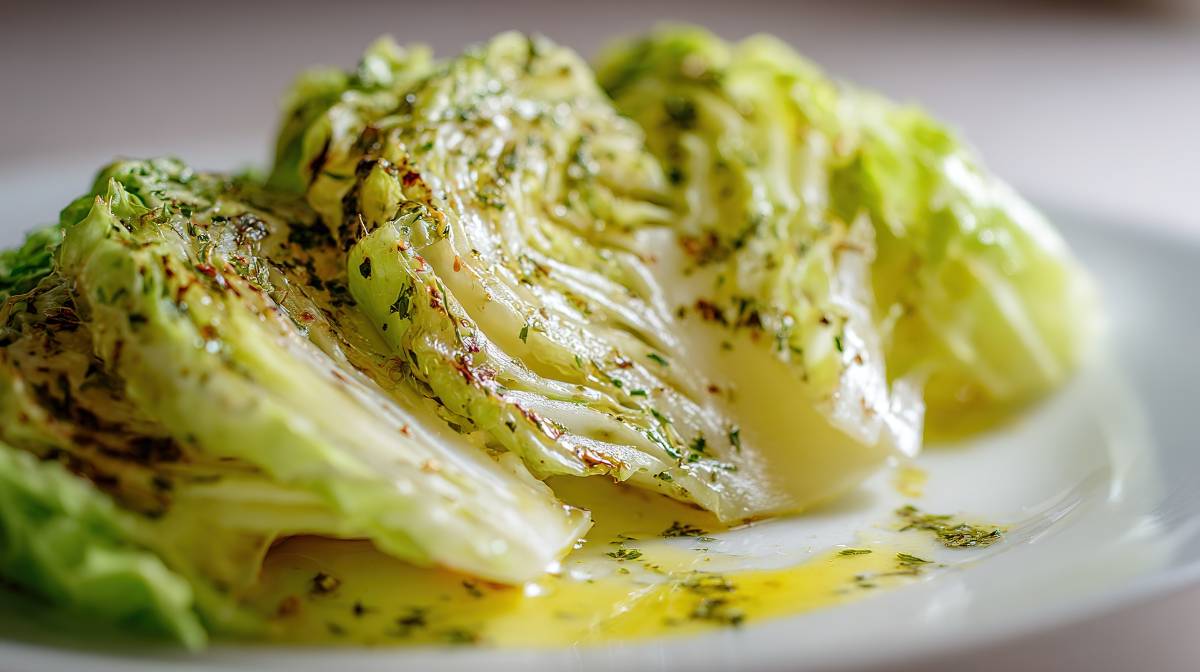
- Transfer the grilled cabbage wedges to a large serving platter, arranging them with the browned cut sides facing upward.
- Spoon the warm lemon butter sauce generously over each wedge, allowing some of the sauce to flow between the cabbage leaves.
- Sprinkle with additional fresh parsley and dill.
- Add a small pinch of crushed red pepper flakes if a little heat is desired.
- Arrange the fresh lemon wedges around the platter.
- Serve immediately while the cabbage is warm and the butter sauce remains fluid.
Nutrition
Notes
Keep the core attached: Cut the cabbage through the center of the core so each wedge retains a small portion. This prevents the layers from falling apart during grilling. The core can be trimmed away after cooking if it remains too firm to eat.
Control the grill temperature: Medium heat works better than very high heat because cabbage requires enough time to soften internally. Excessive heat can burn the outer leaves while leaving the center raw. If necessary, finish the wedges over indirect heat with the grill lid closed.
Use green cabbage for reliable results: Green cabbage has tightly packed leaves that hold together well when cut into wedges. Savoy cabbage can also be used, but its looser, more delicate leaves may cook faster and require more careful handling.
Add lemon juice off the heat: Remove the melted butter from the heat before whisking in the lemon juice. This helps preserve the fresh citrus flavor. The sauce may separate slightly as it stands; whisk it briefly before spooning it over the cabbage.
Prepare the herbs just before serving: Fresh parsley and dill provide the brightest flavor when added near the end of cooking. Avoid simmering the herbs in the butter sauce for an extended period, as they can lose their fresh aroma and vibrant color.
Storage and reheating: Refrigerate leftover grilled cabbage in an airtight container for up to 3-4 days. Store any remaining lemon butter sauce separately. Reheat the cabbage in a 375°F (190°C) oven for approximately 10-12 minutes, until thoroughly heated, then spoon the gently warmed sauce over the top.